
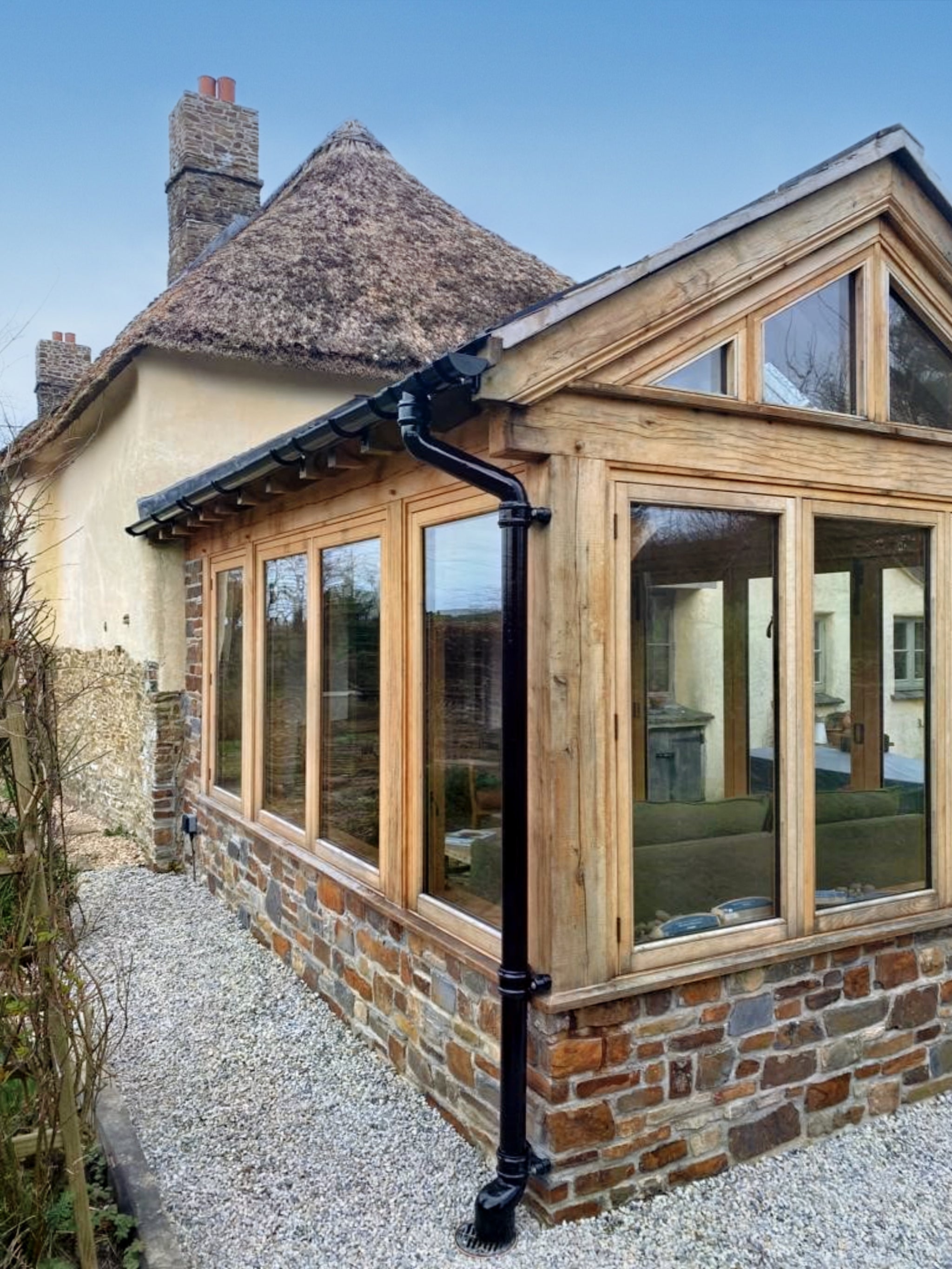
Cast iron guttering has a bit of a reputation. Solid. Traditional. Built to last longer than most of us will be around. And, in fairness, that reputation is well earned.
But once you decide on cast iron, there’s another choice waiting quietly in the wings — primed or factory painted. On paper, it looks simple. In practice, it’s one of those decisions that can save you a lot of time, money, and frustration later on… or quietly cost you if it’s misunderstood.
So let’s slow it down and talk it through properly.
First things first: what do “primed” and “painted” actually mean?
This is where confusion usually starts.
Primed cast iron guttering comes with a basic factory primer only. That primer is there to protect the metal temporarily — during transport, storage, and installation. It is not the finished protection.
Painted (or pre-painted) cast iron guttering is fully finished in the factory, typically using a multi-coat paint system applied under controlled conditions. It arrives ready to install. No additional painting required straight away.
Same cast iron underneath. Very different outcomes over time.
The upfront cost question (yes, painted costs more)
Let’s not dodge it.
Painted cast iron does cost more initially than primed. That’s true. And it’s usually where the conversation stops for people comparing prices quickly.
But guttering isn’t a short-term product. You’re fitting it to protect walls, foundations, and brickwork for decades. Sometimes a century or more. So upfront cost alone doesn’t really tell the story.
The better question is: what happens after installation?
On-site painting: where primed systems often fall down
Primed cast iron must be painted on site. That sounds straightforward enough until real life gets involved.
Think about what’s required for a proper paint finish:
-
Dry conditions
-
Correct temperatures
-
Enough time between coats
-
Consistent paint thickness
-
Careful coverage of joints, bolts, and cut ends
Now add British weather, tight schedules, scaffolding coming down early, and painters juggling multiple jobs.
You can see where things start to slip.
Even when everyone does their best, on-site painting is vulnerable to variables — weather, skill level, paint quality, drying times. Miss a coat or rush one stage, and moisture finds its way in. Once that happens, corrosion doesn’t announce itself loudly. It just gets on with it.
Quietly. Expensively.

Why factory-painted cast iron behaves differently
Factory painting isn’t just about convenience. It’s about control.
Painted cast iron systems are typically finished using a certified multi-coat system, applied in strictly controlled environments. Temperature, humidity, curing time — all managed. Every section receives consistent coverage, including awkward edges that are easy to miss on site.
The result?
-
A smoother, tougher finish
-
Far better resistance to early corrosion
-
Longer intervals before repainting is needed
Many factory-painted systems won’t need attention for up to 10 years after installation, assuming normal conditions .
That’s a long time not to think about guttering. Which is, frankly, the point.
Longevity: both can last — but only if protected properly
Here’s something that often gets misunderstood.
Cast iron itself is incredibly durable. Properly protected and installed, it can last well over 100 years. That applies to both primed and painted systems.
The difference is how easily that protection fails.
Primed systems rely heavily on perfect on-site painting and ongoing maintenance. Painted systems build in that protection from day one. Fewer weak points. Less reliance on ideal conditions.
It’s not that primed cast iron is “bad”. It’s just far less forgiving.
Maintenance over time (this is where costs really diverge)
Paint finishes don’t last forever. That’s true for all materials. The question is how soon maintenance starts — and how often it returns.
With primed systems, repainting often becomes necessary much earlier, especially if:
-
The original on-site paint job was rushed
-
Weather conditions weren’t ideal
-
Certain areas were missed or under-coated
Once corrosion starts, maintenance stops being cosmetic and becomes corrective. That’s when costs climb quickly.
With painted systems, maintenance is slower, more predictable, and usually less invasive. Repainting is still part of long-term ownership, but it happens later — and with fewer nasty surprises.

Colour choice and consistency
Another practical difference that rarely gets discussed properly.
Factory-painted cast iron is available in a wide range of standard RAL colours, with consistent finish across every component. What you see is what you get. Elbows match pipes. Gutters match outlets.
On-site painting can achieve good results, but matching colours perfectly across multiple coats, painters, and weather conditions is harder than it sounds.
If appearance matters — and on most homes, it does — consistency counts.
Installation quality still matters (whatever you choose)
No coating can fix poor installation.
Bad falls, loose fixings, badly aligned joints — they’ll cause issues regardless of whether the system is primed or painted. But when you combine solid installation with factory-applied protection, you’re stacking the odds in your favour.
Painted systems simply remove one major risk from the process.
So… which should you choose?
There’s no one-size-fits-all answer, but there is a sensible rule of thumb.
-
Primed cast iron can work well where budgets are tight and you’re confident in the quality and timing of on-site painting.
-
Painted cast iron suits homeowners who want longevity, predictability, and fewer maintenance headaches over time.
If the building matters — architecturally, financially, or emotionally — painted cast iron is usually the safer long-term choice.
Not cheaper upfront. Smarter overall.
Final thoughts
False savings are rarely obvious at the start. They tend to show up years later, in the form of damp patches, scaffold hire, repainting bills, and repairs that cost far more than the original saving ever did.
Cast iron guttering is already a commitment to doing things properly. Choosing the right finish is simply finishing that thought.
If you’re going to install something designed to last a century, it makes sense to protect it like you mean it.