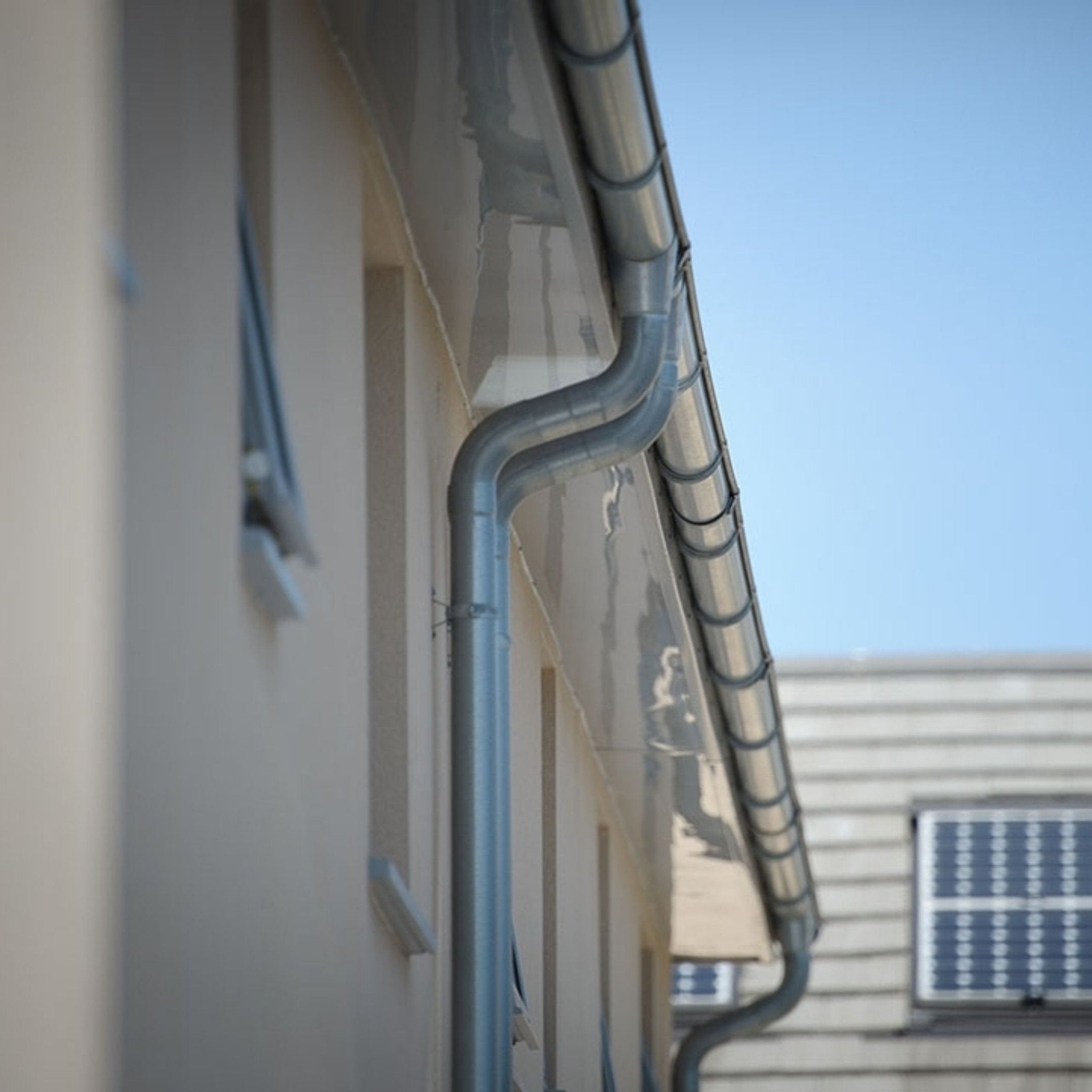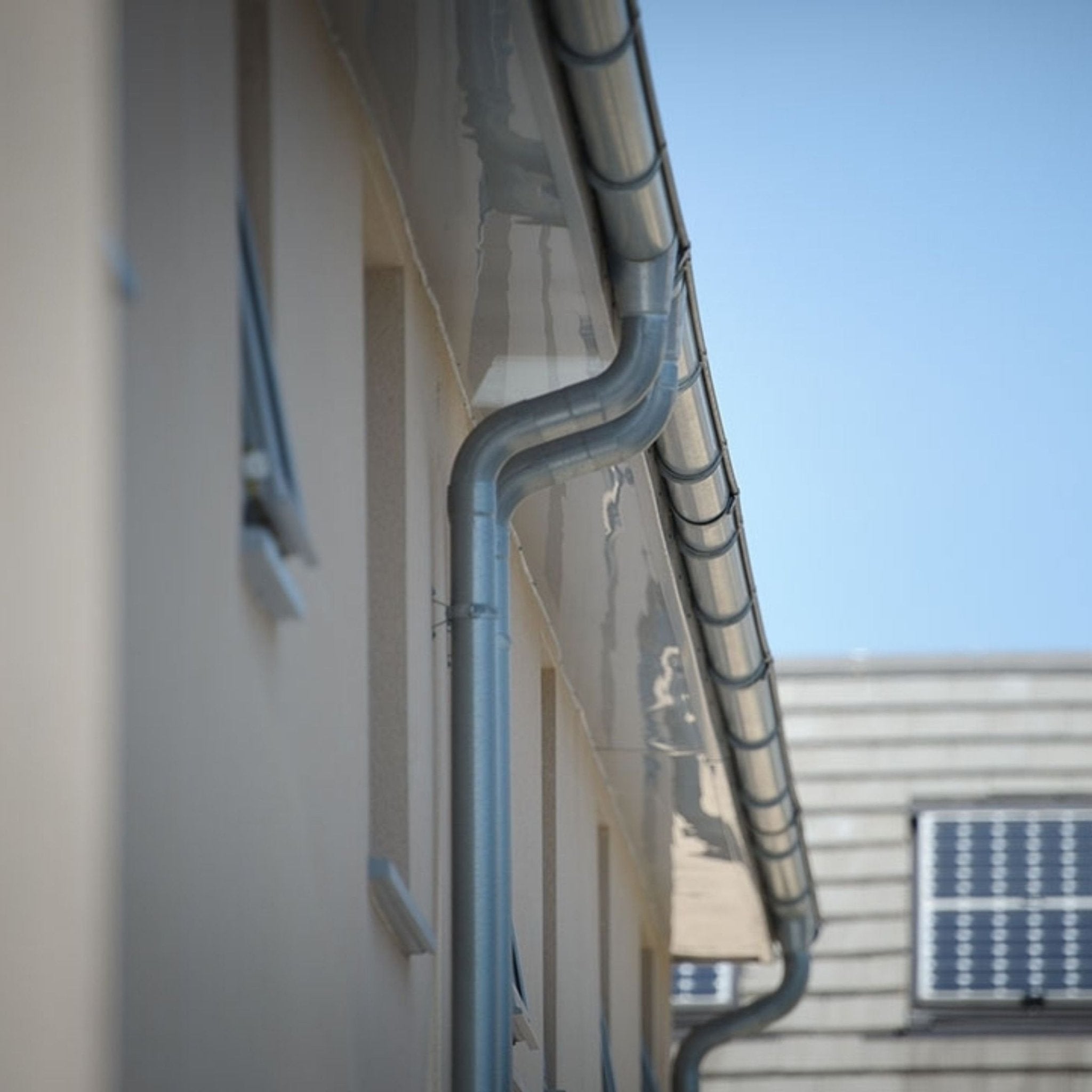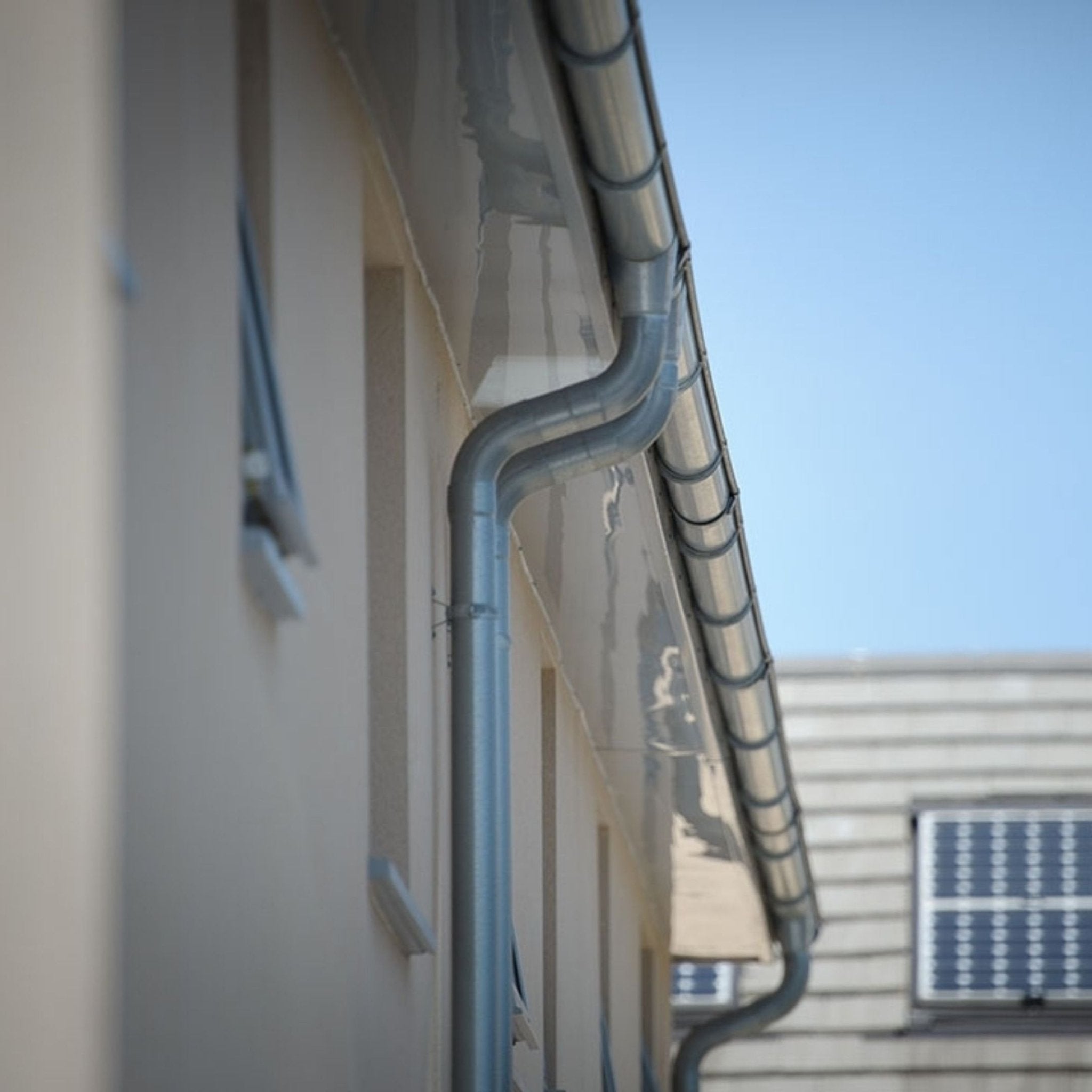

Choosing the right gutter and downpipe size is one of the most overlooked — yet most critical — decisions in any rainwater system design.
Undersized guttering leads to overflow, damp walls, foundation damage, rot, mould and premature failure of the entire system. Oversizing unnecessarily increases cost and can look visually unbalanced.
This guide explains exactly how to size gutters and downpipes correctly for UK homes, using practical methods that apply to metal rainwater systems, including galvanised steel guttering.
Whether you’re a homeowner, installer or specifier, this article will give you the confidence to size your system correctly — and avoid costly mistakes.
Why Gutter & Downpipe Sizing Matters More Than Ever
UK rainfall patterns have changed.
Short, intense downpours are becoming more frequent, placing far greater demand on rainwater systems than those designed decades ago.
Gutters must now cope with:
-
Higher peak rainfall intensity
-
Sudden volume surges
-
Longer roof runs on modern extensions
-
Reduced tolerance for overflow in urban settings
Correct sizing is no longer optional — it’s essential.
Is There a Standard Gutter Size in the UK?
No — and this is where many people go wrong.
There is no single “standard” gutter or downpipe size in the UK because performance depends on:
-
Roof area
-
Roof pitch
-
Rainfall intensity
-
Number of outlets (downpipes)
-
Gutter profile and material
A small roof in a low-rainfall area may work perfectly with compact guttering.
A larger or steeper roof — or one in a high-rainfall region — will not.

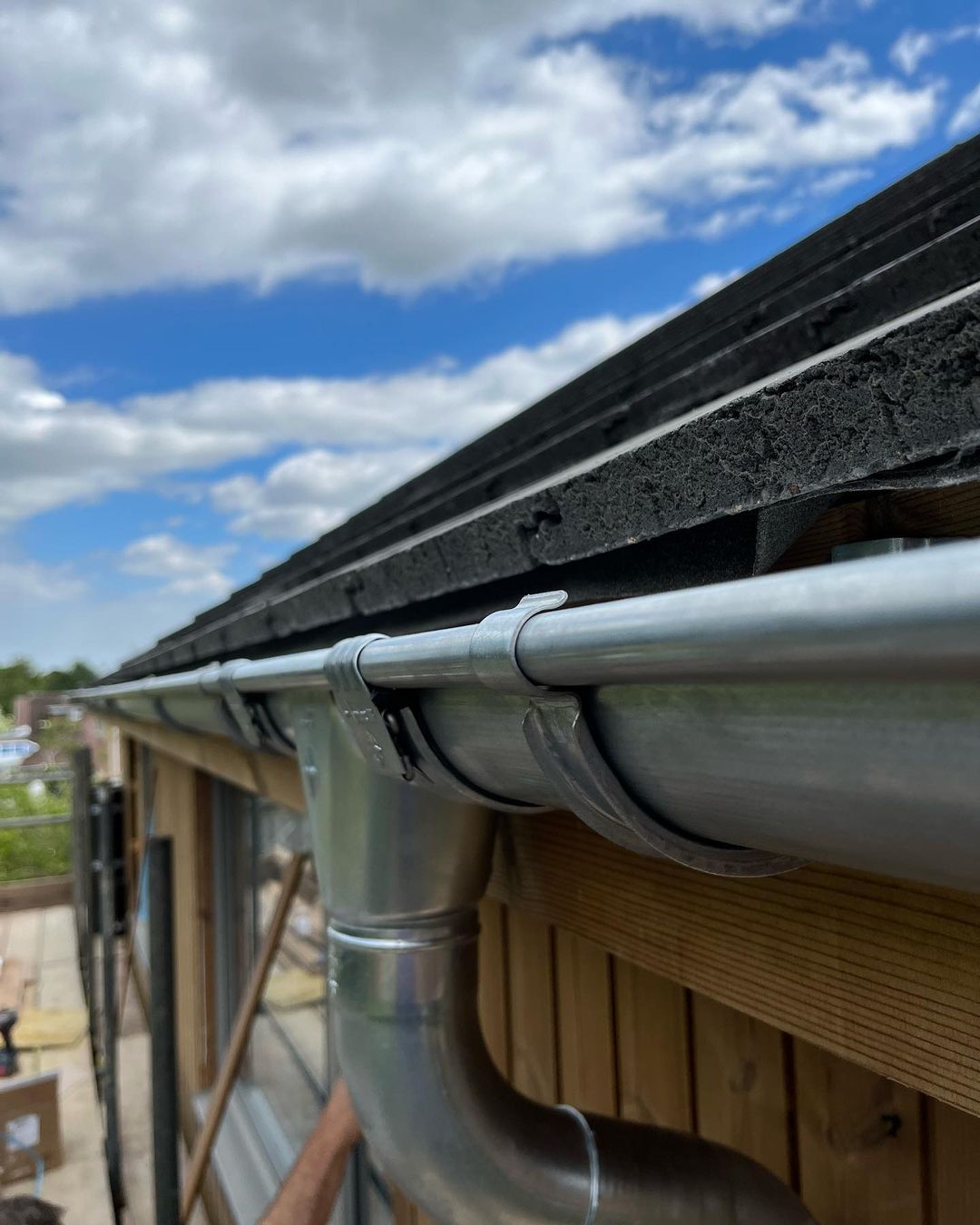
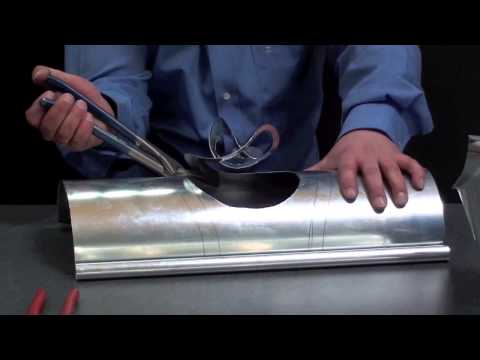
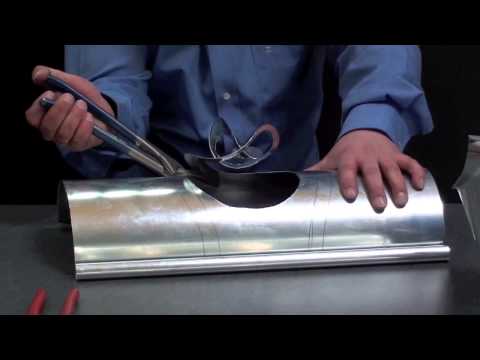
Copper Guttering being installed.
The 4 Factors That Determine the Correct Gutter Size
1. Roof Catchment Area (Not Just Roof Size)
Rainwater systems are sized based on effective roof catchment area, not the building footprint.
The steeper the roof, the more water it sheds into the gutter during heavy rainfall.
Formula used by professionals:
Catchment Area (m²) = (P + H ÷ 2) × L
Where:
-
P = horizontal distance from eaves to ridge
-
H = vertical height of the roof
-
L = length of the eaves
This accounts for roof pitch, not just surface area.
2. Rainfall Intensity (Location Matters)
Rainfall intensity varies significantly across the UK. Coastal, western and upland areas experience much higher peak rainfall rates than eastern or sheltered regions.
Professional system sizing is based on rainfall intensity measured in litres per second per square metre (l/s/m²), typically using 1-year storm events for external gutters.
This ensures the system handles heavy but realistic rainfall — not just average drizzle. unsure of which system to buy? Read our full guide on how to choose the best metal rainwater system.
3. Number and Position of Downpipes
A common mistake is assuming one downpipe per side of the house is enough.
In reality:
-
Longer gutter runs need multiple outlets
-
Valleys concentrate water into smaller areas
-
Central outlets reduce flow distance and improve performance
More outlets = lower flow demand per downpipe, allowing smaller diameters to perform effectively.

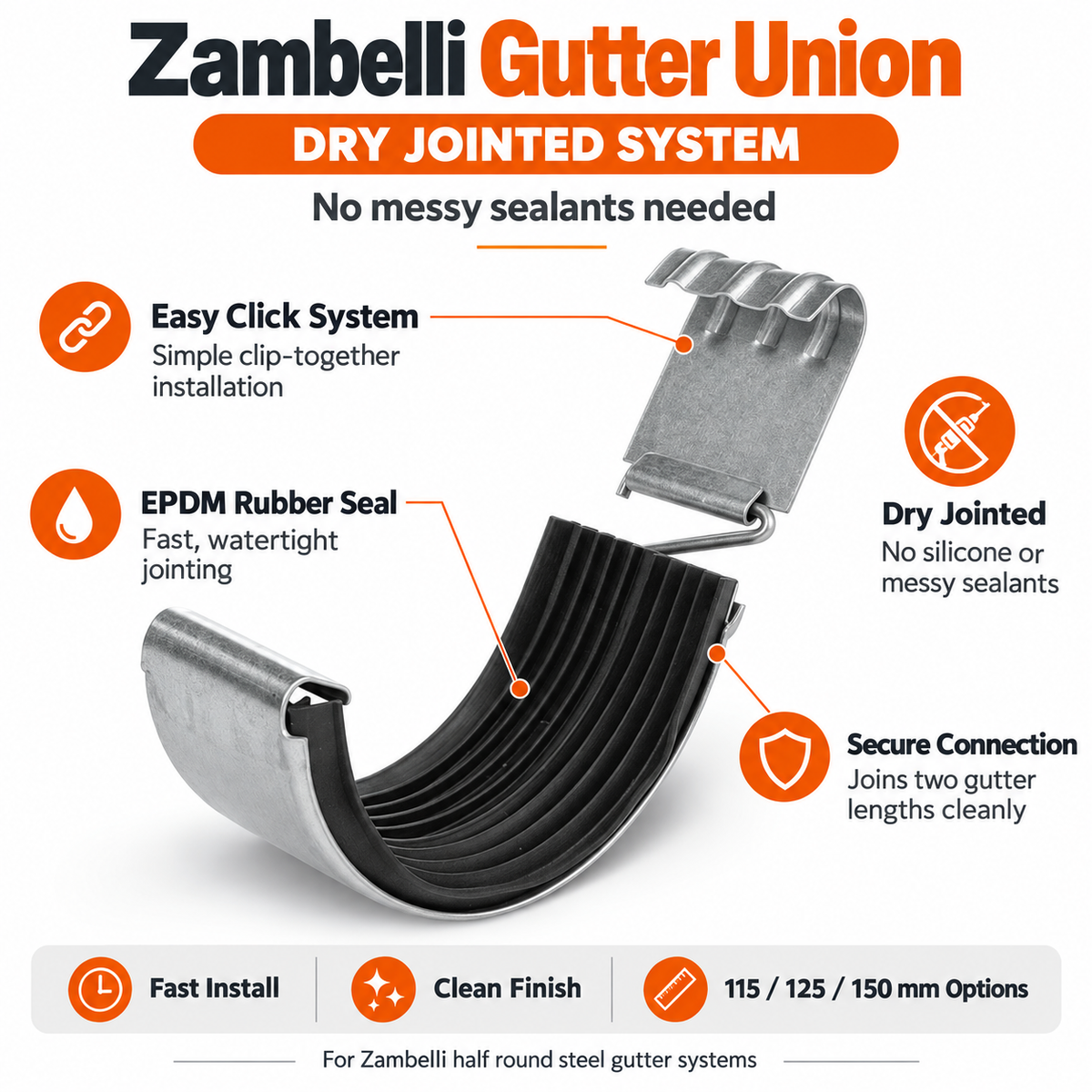
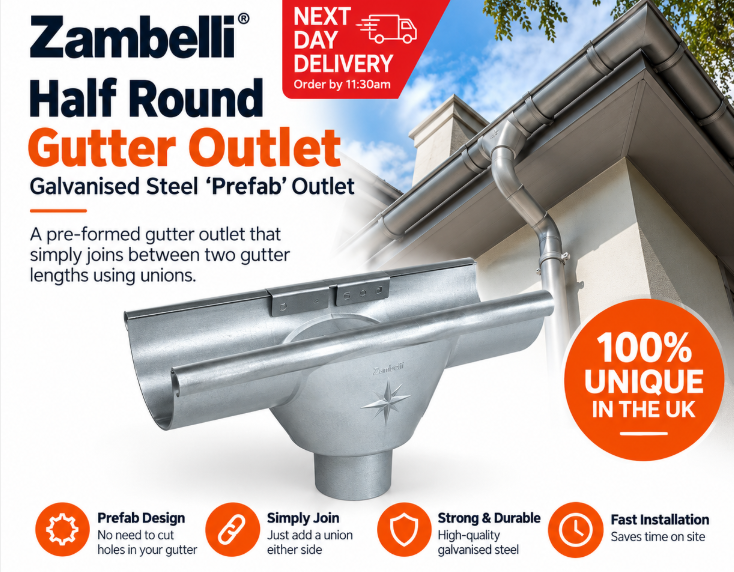
Zambelli (the steel guttering brand we offer) has prefab outlets, meaning outlets are already pre-joined to the gutter cut. It makes installation a breeze!
4. Gutter Profile & Material
Not all gutters of the same nominal size move the same volume of water. For example, cast iron gutters move water differently to aluminium box gutters.
Key differences:
-
Deep-flow half-round profiles outperform shallow designs
-
Metal gutters maintain shape under load (plastic often deforms)
-
Steel allows thinner profiles with higher strength
This is why metal guttering can often outperform larger plastic systems when correctly specified.
How to Calculate Flow Rate Requirements (Simplified Method)
Professionals calculate flow rate like this:
-
Overall Rainfall (OR)
Catchment Area × Rainfall Intensity
-
Flow Per Outlet
Overall Rainfall ÷ Number of Outlets
-
Select Gutter & Downpipe Sizes
Match components to published flow capacity tables.
If you’re unsure, Trade Warehouse can help you calculate this accurately using your roof details.
Common UK Gutter & Downpipe Sizes (What They’re Actually Used For)
Typical Gutter Sizes
-
115mm half-round – Small roofs, garages, porches
-
125mm half-round – Most standard UK houses
-
150mm half-round – Larger roofs, high rainfall areas
-
Deep-flow profiles – Long runs or intense rainfall zones
Common Downpipe Sizes
Downpipes are available in round and square formats.
Round Downpipes
-
60mm – small roof areas
-
75mm – standard domestic use
-
87–100mm – large roofs or high-flow areas
Square Downpipes
-
75 × 75mm – common modern installations
-
100 × 75mm – high-capacity or heritage-style systems
Downpipe size is measured by outer diameter (OD) for round pipes.
To calculate OD from circumference:
Diameter = Circumference ÷ π (3.14)
Why Metal Guttering Performs Better When Correctly Sized
Metal systems — particularly galvanised steel — offer major sizing advantages:
-
Higher flow capacity per profile
-
Minimal deformation under water load
-
Better performance in cold weather
-
Longer lifespan with consistent internal dimensions
Plastic gutters often sag or distort, reducing effective flow even if originally sized correctly.
Common Sizing Mistakes to Avoid
-
Using gutter size alone without considering downpipe capacity
-
Ignoring roof pitch
-
Underestimating rainfall intensity
-
Using too few outlets
-
Mixing incompatible components from different systems
Any one of these can compromise the entire installation.
Professional Tip: Bigger Isn’t Always Better
Oversizing gutters:
-
Increases cost
-
Can look visually heavy
-
Doesn’t compensate for poor outlet positioning
Correct design always beats brute size.
Need Help Choosing the Right Gutter & Downpipe Size?
At Trade Warehouse, we specialise in metal rainwater systems and help customers every day with:
-
Gutter sizing
-
Downpipe selection
-
Outlet positioning
-
Product compatibility
If you provide:
-
Roof dimensions
-
Roof pitch
-
Location
-
Number of planned downpipes
We can guide you to the correct, efficient, long-lasting solution — not guesswork.
Final Thoughts: Correct Sizing Is the Foundation of Every Great Gutter System
Choosing the right gutter and downpipe size protects:
-
Your walls
-
Your foundations
-
Your roof structure
-
Your investment
Get it right once, and a quality metal rainwater system will quietly do its job for decades.
Get it wrong, and even the best materials won’t save you.