
If you’re choosing metal rainwater goods, you’re already past plastic. That usually means you care about longevity, appearance, and doing it once properly. The question then becomes: which metal actually makes sense for your building?
This guide compares zinc gutters with three common alternatives used in the UK:
No hype. No “best overall” nonsense. Just where each system performs well, where it doesn’t, and how to choose based on real-world use.
Zinc gutters: what sets them apart
Zinc is often chosen for one reason above all others: how it ages.
Rather than always relying on paint or coatings, zinc forms a natural protective patina. Over a long period of time, this patina dulls to a soft matt finish and protects the metal beneath from corrosion. That’s why zinc has a reputation for very long lifespans when installed correctly.

We produced a helpful guide on comparison between natural & quartz zinc gutters.
Key strengths
-
Extremely long service life
-
Self-protecting surface (no repainting cycles)
-
Clean, architectural appearance
-
Well suited to contemporary and high-end builds
Things to be aware of
-
Higher upfront cost
-
More specialised installation
-
Patina changes appearance over time (some people love this, some don’t)
-
Less forgiving of poor detailing or incompatible materials
Zinc rewards good design and good installation. It punishes shortcuts.

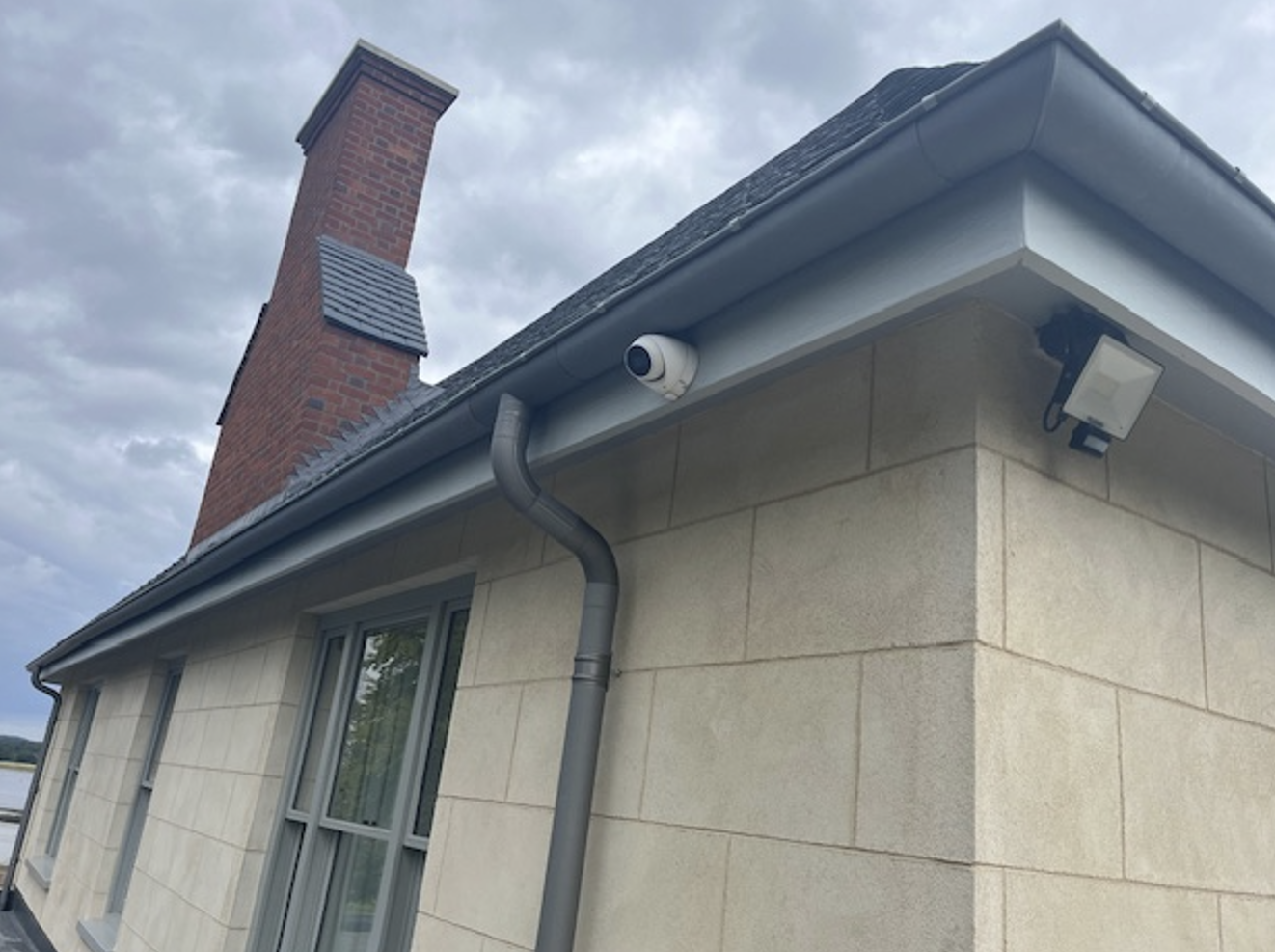
The image above shows how natural zinc gutters weather over time.
Zinc vs Galvanised Steel Gutters
This is a comparison a lot of buyers wrestle with, because on the surface both are steel-based systems and both are readily available next working day.
The differences are more about how they’re protected and how they age.
Material & protection
-
Zinc protects itself through patination. No coating to fail.
-
Zambelli galvanised steel relies on a galvanised layer and painted finish for protection.
Both are durable, but they age differently. Zinc quietly develops character. Galvanised steel largely keeps its original look until the coating eventually wears.

Image shows plain galvanised steel gutters on a UK property.
Appearance over time
-
Zinc changes. That’s part of its appeal.
-
Zambelli, by contrast, stays visually consistent for many years, especially if not abused!
If you want a system that looks the same year after year, galvanised steel often feels more predictable.
Maintenance
-
Zinc requires very little intervention once installed.
-
Galvanised steel may eventually need a bit of "TLC" if the coating is damaged. You can read more about maintaining steel gutters in our help centre.
Neither is high maintenance, but zinc edges ahead ahead long-term.
Cost and value
-
Zinc is typically the more expensive option upfront. On our website, you are looking at about £50+ VAT per 3m length in the 115mm size.
-
Zambelli galvanised steel (with its new and improved coating) offers excellent performance at a lower initial cost.
For many homes, Zambelli really does hit a sweet spot, because it delivers the practical benefits people want from metal guttering without pushing them into zinc-level pricing. You get a system that’s robust, stable and well-engineered, but one that feels more approachable from a budget point of view, especially on full-house installations where costs add up quickly.
What appeals to a lot of homeowners is the balance. Zambelli galvanised steel has enough weight and rigidity to feel solid once installed, so it doesn’t come across as flimsy or temporary, yet it avoids the premium that comes with zinc’s material cost and specialist detailing. In everyday use, it performs exactly as you’d expect a good metal system to perform: it drains well, holds its line, and copes confidently with typical UK weather.
Which to choose?
Choose zinc if:
-
you want a premium architectural finish
-
you’re comfortable with natural ageing
-
long-term lifespan matters more than initial spend
Choose Zambelli galvanised steel if:
-
you want durability without the zinc price
-
you prefer a consistent painted finish
-
you want something robust, modern, and cost-effective.
Zinc vs Cast Iron Gutters
This comparison really isn’t about which system performs better in a technical sense, because both zinc and cast iron are proven materials when they’re specified and installed correctly. Instead, it comes down to what the building is trying to say and how the rainwater system fits into that story.
Cast iron offers weight and tradition that’s hard to replicate. On older properties, terraces, Victorian and Edwardian houses, or listed buildings, it often feels like part of the architecture rather than an add-on. The proportions, the way joints and brackets are expressed, and even the visual heaviness all suit buildings that were designed in an era when rainwater goods were meant to be seen, not hidden!
Zinc, by contrast, is quieter and more restrained. It tends to recede visually rather than assert itself. On modern homes, contemporary extensions, or minimalist designs, that subtlety is a strength. The soft matt patina that develops over time complements clean lines and modern materials in a way cast iron simply wouldn’t. Put zinc on the wrong building, though, and it can feel a little too understated, even out of place.
Lifespan
Both zinc and cast iron gutters can last centuries. Cast iron has proven this historically, but only with regular maintenance and repainting.
Zinc achieves similar longevity with far less intervention.

Appearance
-
Cast iron looks right on period and listed buildings. It has weight and presence.
-
Zinc looks modern, crisp, and understated.
Trying to swap one for the other without considering the architecture usually looks wrong.
Maintenance reality
-
Cast iron needs repainting cycles and joint attention.
-
Zinc does not need painting and resists corrosion naturally.
Cast iron isn’t “hard work”, but it is honest about needing upkeep.
Installation and repair
Which to choose?
Choose zinc if:
-
the building is modern or contemporary
-
low maintenance is a priority
-
you want clean lines rather than heritage detail
Choose cast iron if:
-
the building is period or listed
-
visual authenticity matters
-
you’re prepared for ongoing maintenance
This is rarely a straight technical decision — it’s usually an architectural one.
Zinc vs Aluminium Gutters
This is probably the most common modern comparison.
Strength and rigidity
-
Zinc is heavier and more rigid.
-
Aluminium gutters are lighter and easier to handle.
Aluminium is undeniably easier to work with. It’s lighter to lift, simpler to manoeuvre at height, and generally quicker to install, which is why it’s popular with installers and often more cost-effective on straightforward jobs. On paper, those are all positives, especially for modern homes or projects where speed and access matter.
That same lightness, however, can change how the system feels once it’s on the building. On larger elevations or more solid-looking properties, aluminium gutters can sometimes appear a little insubstantial, particularly when compared side by side with heavier metal systems. They do the job perfectly well, but visually they can lack the sense of permanence that some buildings benefit from.
There’s also a subtle performance aspect to weight. Heavier systems tend to feel more settled once installed, with less movement from wind, ladders being rested against them, or minor impacts. Aluminium isn’t flimsy by any means, but it can be more prone to showing movement or small dents if it’s knocked, simply because there’s less mass behind it.

The Ogee Aluminium Gutter is one of our most popular ranges.
Durability
-
Zinc develops a protective patina.
-
Aluminium relies on coatings and paint systems.
Both perform well, but zinc generally has the edge in long-term resilience if detailing is right.
Dents and damage
-
Aluminium dents relatively easily.
-
Zinc can dent too, but tends to feel more solid overall.
Neither material is fragile, but aluminium shows handling marks more readily.
Cost
-
Aluminium is usually cheaper.
-
Zinc sits firmly in the premium category.
Which to choose?
Choose zinc if:
-
you want longevity without repainting
-
you prefer a natural metal finish
-
the project justifies a premium material
Choose aluminium if:
-
budget is a key factor
-
weight and ease of installation matter
-
you want a painted system with colour flexibility
A quick, honest comparison table
| System | Lifespan | Maintenance | Appearance | Cost |
|---|---|---|---|---|
| Zinc | Very long | Very low | Natural, architectural | High |
| Zambelli galvanised steel | Long | Low | Clean, consistent | Medium |
| Cast iron | Very long | High | Traditional, heritage | Medium–High |
| Aluminium | Long | Low–Medium | Modern, painted | Low–Medium |
