What Size Polycarbonate Greenhouse Should I Buy?
Start with the usable space in your garden, not the biggest greenhouse you can squeeze into it.
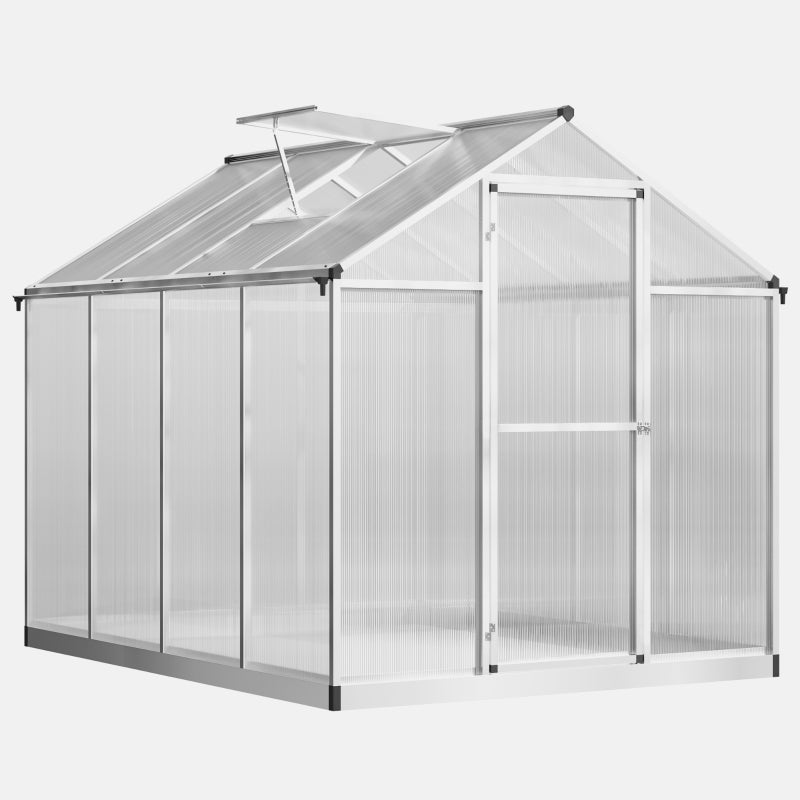
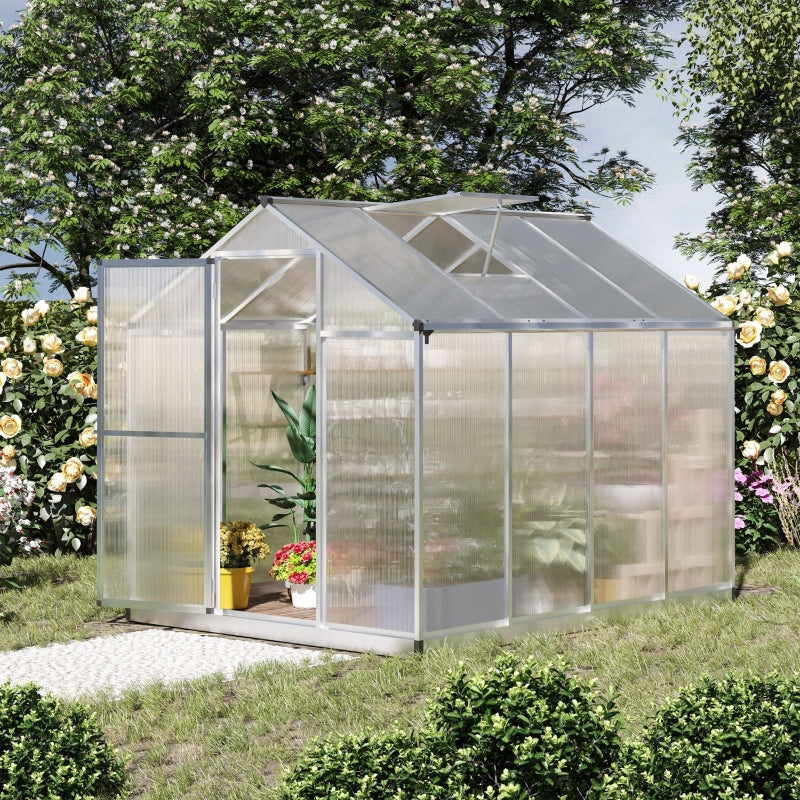
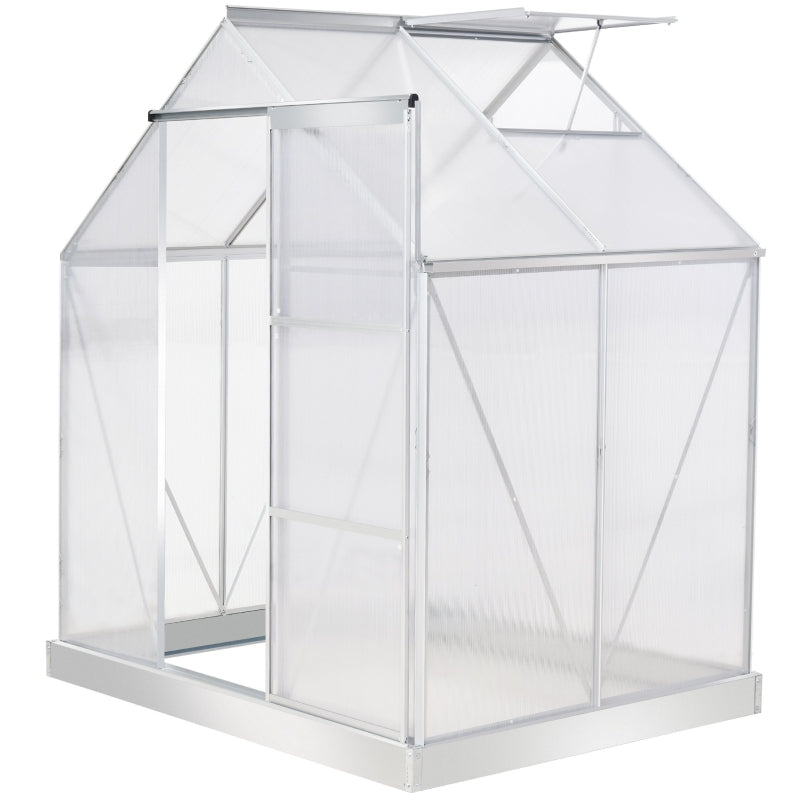
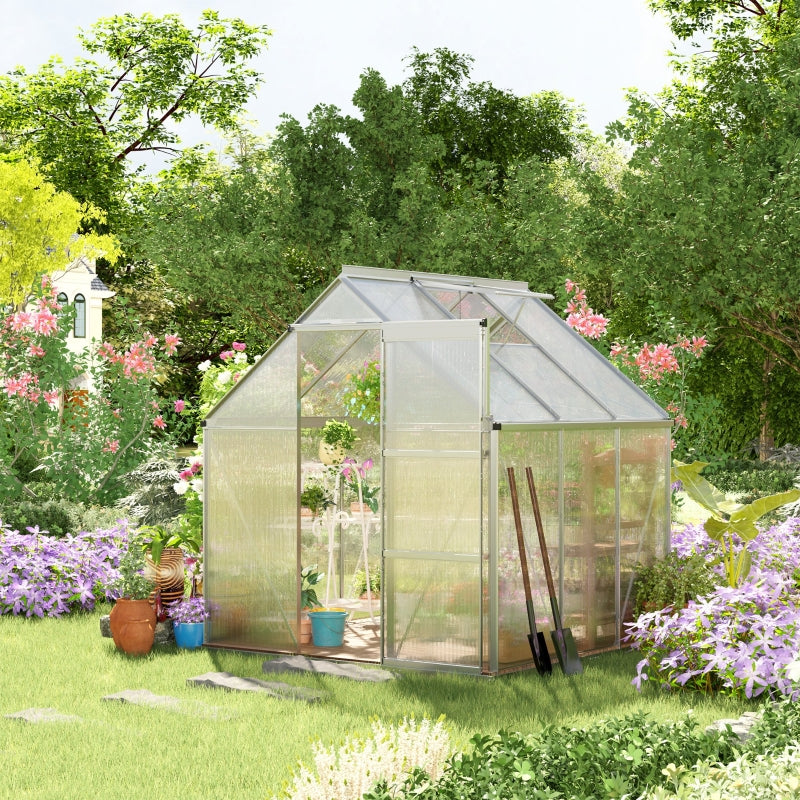
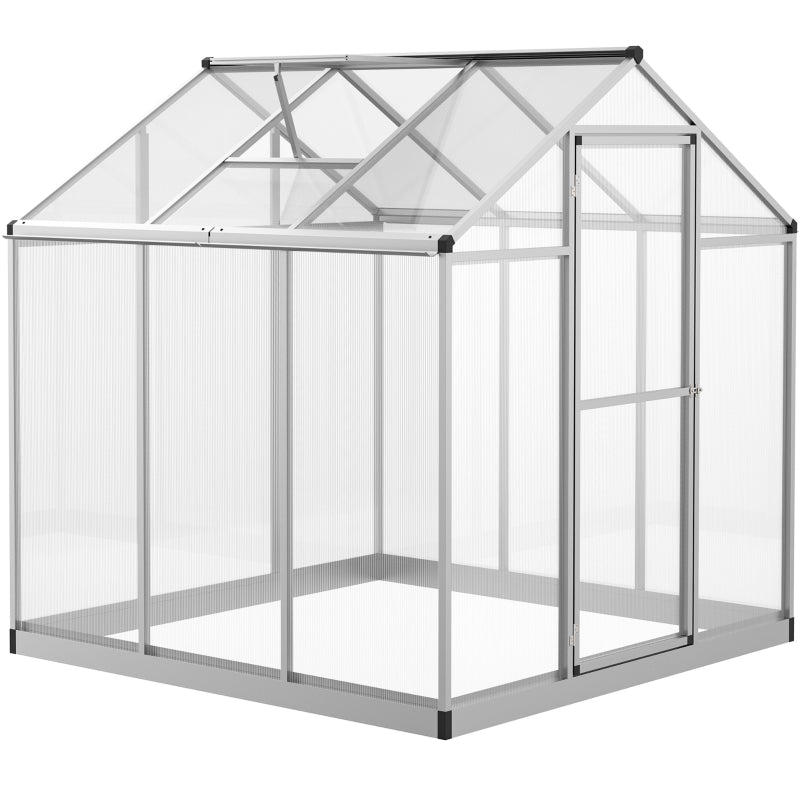
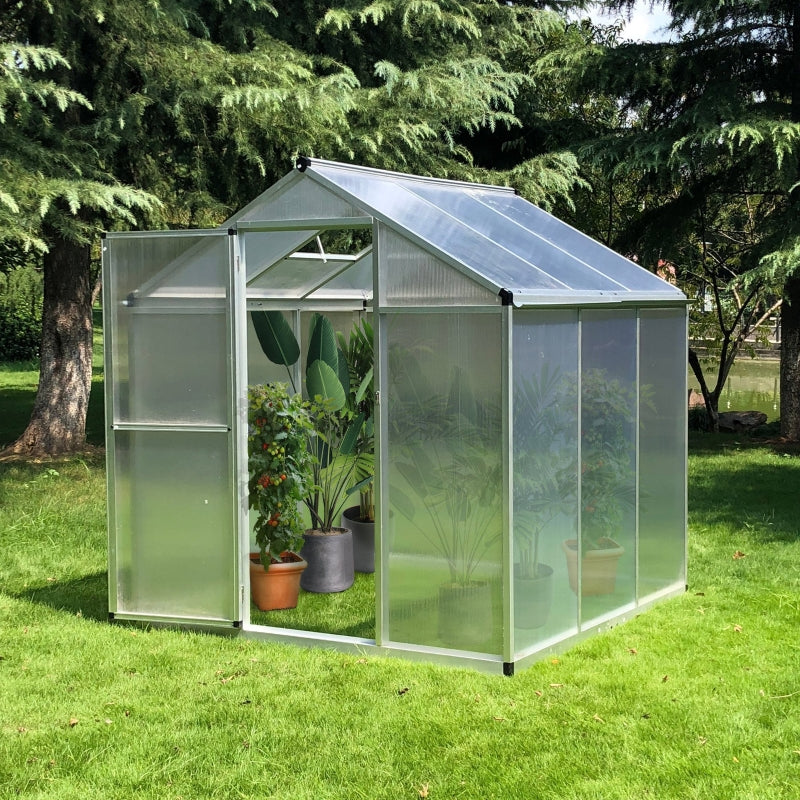
A 6x4 greenhouse works well where space is limited and you mainly want shelving, seed trays or a few tomato plants. Moving up to 6x6 gives you more room to work inside, and 6x8 or 6x10 models make more sense if you’re planning several growing beds or want space down both sides.
Leave some room around the outside too. You’ll appreciate it later when cleaning panels, opening doors or getting around the frame.
For very compact spaces, have a look at our mini greenhouses. If you want enough headroom to work properly inside, our walk-in greenhouses are the better place to start.
Polycarbonate vs Glass Greenhouses
Polycarbonate and glass both work well, but they suit different priorities.
Glass gives you a very clear view through the greenhouse and has the traditional appearance many people like. Polycarbonate is much lighter and far less likely to break into sharp pieces, which makes handling and assembly easier.
Twin-wall polycarbonate can help reduce heat loss compared with a thin single sheet of glass too. The trade-off is clarity. You won’t get quite the same crystal-clear view through the panels.
For family gardens, allotments and greenhouses being assembled at home, polycarbonate is often the more practical choice.
What Does Polycarbonate Panel Thickness Mean?
Not every polycarbonate greenhouse uses the same glazing.
Some models use thinner panels, with others using thicker or twin-wall sheets. A thicker panel can provide more rigidity and better insulation, but greenhouse performance depends on the whole structure as well — frame design, ventilation, panel fit and anchoring each matter.
Check the individual product specification before ordering if panel thickness is a priority for you.
Do Polycarbonate Greenhouses Need a Base?
A level base makes assembly much easier.
Some greenhouses in the range come with a base frame or foundation included. Others may need a suitable surface prepared before assembly.
Concrete, paving slabs and properly prepared timber bases can each work, depending on the model and garden. Soft or uneven ground makes it harder to get doors lined up and panels sitting properly in the frame.
Spend a bit of time getting the base square and level first. It saves a lot of messing around later.
How Easy Are Flat-Pack Greenhouses to Assemble?
Every greenhouse in this collection arrives flat packed.
Most are intended for straightforward home assembly and are much easier with two people. Lay the components out first, identify the frame sections and glazing panels, and build on a calm day if possible.
Trying to fit large lightweight panels in strong wind is not much fun.
Assembly time varies with greenhouse size and design, so check the manual for the model you’re buying. Smaller greenhouses can go together fairly quickly, where a larger 6x8 or 6x10 structure naturally takes longer.
Where Should I Put a Polycarbonate Greenhouse?
Choose somewhere reasonably level with good access and plenty of daylight.
Avoid putting the greenhouse directly beneath large trees where falling branches, constant leaf debris or heavy shading could become a problem. Think about access to water too, especially if you’ll be growing through summer.
Orientation matters less than having a sensible, usable position. A greenhouse tucked into a dark corner simply to keep it out of the way won’t be much use for growing.
How Important Is Greenhouse Ventilation?
Very.
A greenhouse can heat up quickly on a sunny day, including during spring and autumn. Roof vents and opening windows let warm air escape and help reduce excessive humidity inside.
Some models include adjustable roof vents, with certain larger greenhouses offering automatic vent opening too.
If you plan to grow tomatoes, chillies or other crops through summer, ventilation is worth paying attention to before choosing your greenhouse.