
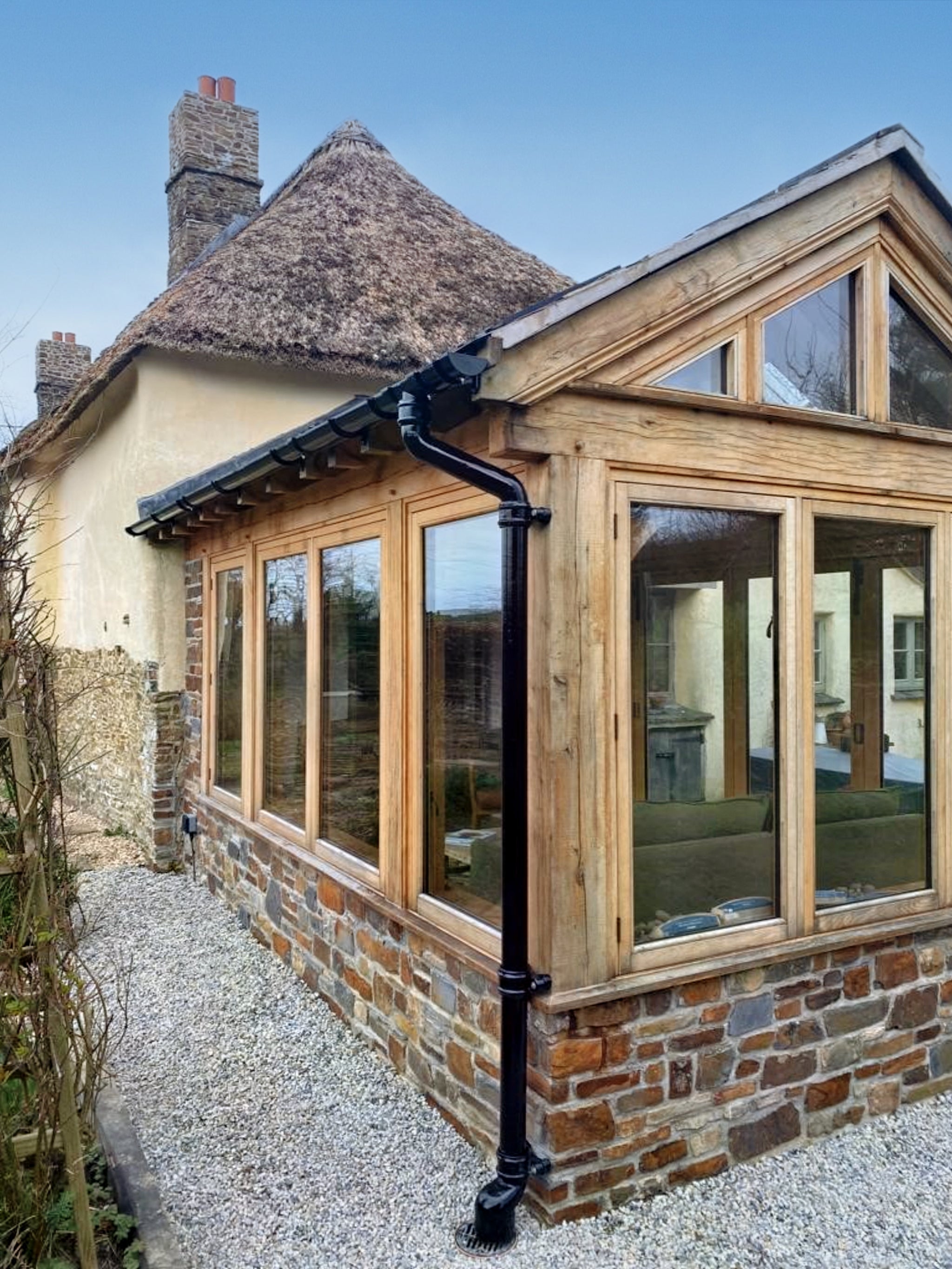
If you own a period property in the UK, chances are you’ve already had some sort of run-in with your gutters. A drip that only appears when it really lashes down. Rust marks creeping down the brickwork. Or that nagging question: “Do I repair what I’ve got… or rip it all out and start again?”
Cast iron gutters sit right at the centre of that dilemma. They’re heavier, pricier and more demanding than plastic – yet they’re still fitted to thousands of homes for a reason. When properly designed, installed and maintained, they outperform most modern alternatives and look right doing it.
The problem is this: most guides online either oversimplify cast iron guttering or treat it like a museum relic. Neither helps you make good decisions.
This guide is different. It’s written from the perspective of people who deal with cast iron rainwater systems every day – supplying, matching, repairing and replacing them using proven UK manufacturers like ARP and Hargreaves.
By the end, you’ll know:
-
whether your system needs repair or replacement (and how to tell)
-
why cast iron gutters leak or overflow – and how to fix each cause
-
how to avoid wasting money on unnecessary work
-
what to look for when buying parts or getting quotes
-
how to look after cast iron properly so it lasts decades, not years
Who this guide is for (and how to use it)
This guide is absolutely written for:
-
owners of Victorian, Edwardian, Georgian or early 20th-century homes
-
anyone with existing cast iron gutters or downpipes
-
homeowners in conservation areas or with listed buildings
-
people weighing up cast iron vs uPVC or aluminium
You don’t need to read it cover to cover in one go. Many people dip straight into:
-
“Repair vs replace” if something’s leaking
-
“Overflow problems” if water spills during heavy rain
-
“Costs” if you’re budgeting for work
-
“Listed buildings” if planning consent is on your mind

A handy "cheat sheet" table.
What cast iron gutters actually are (and why they’re still used)
When people say cast iron gutters, they usually mean the whole rainwater system:
-
gutter lengths
-
internal and external angles
-
stop ends and unions
-
outlets
-
downpipes, offsets and shoes
-
brackets and fixings
On older UK housing stock, these systems were designed as a single, coherent network. They weren’t an afterthought. Roof pitch, gutter profile, outlet size and downpipe diameter all worked together.

Cast Iron Downpipes - Available in both round and square profiles.
Why cast iron has stood the test of time
There are three big reasons why cast iron is still being specified today:
1. Durability (when properly maintained)
Cast iron does not degrade in the sun, does not become brittle with age, and does not derive strength from thin walls. It fails in a localised and therefore repairable way.
2. Repairability
A leaky joint, a broken angle, or a failed outlet does not mean replacing the whole thing. The sections can be resealed or replaced, especially if using established systems such as ARP or Hargreaves cast iron.
3. Architectural integrity
On older homes, cast iron just looks right. Plastic doesn’t. It looks like someone added it as an afterthought. Aluminium can look good, but only if carefully chosen.
The honest trade-offs
Cast iron is not perfect, and the trade-offs are:
- it is heavy
- it must be painted - read our helpful guide here
- it demands care and expertise in the way it is installed
- But most horror stories stem from bad installation and poor maintenance, not the cast iron itself.
ARP vs Hargreaves: choosing the right cast iron system (properly)
Both ARP and Hargreaves are long-established UK manufacturers with solid reputations in cast iron rainwater goods.
That alone already puts them miles ahead of generic imports or short-run systems that quietly disappear after a few years.
But here’s the key thing most guides never spell out clearly enough:
Choosing between ARP and Hargreaves is rarely about “which brand is better”.
It’s about which system works with what you already have.
Cast iron guttering isn’t forgiving. Small dimensional differences that wouldn’t matter with plastic absolutely do matter with iron.
And this is where a lot of homeowners – and even some installers – come unstuck.
What actually matters when choosing a cast iron system
If you take all that away – the brochures, the branding – then there are four things that matter more than anything else when choosing:
1. The accuracy of the profile (and this is non-negotiable)
Cast iron gutter profiles are not universal.
Half rounds come in different forms (i.e beaded or non-beaded). The depth of the gutter, the thickness of the iron, the shape of the lip – all of these differ slightly from system to system and from era to era.
If you’re working with an existing gutter system:
- The new gutter must physically marry up to the old gutter
- The joints need to compress evenly
- The bolt holes need to be in the correct position
A profile that looks like it will do the trick – that looks like it will match up – can still cause problems at the joint.
Even a couple of millimetres’ difference in depth or shape of the lip can cause a gutter to leak slowly but persistently – to never go away.
So profile comes before brand.

Above shows the painted black cast iron victorian ogee cast iron guttering.
2. Component availability (where cheap systems fall apart)
A good cast iron system isn’t just about gutter lengths. It’s the ecosystem of parts around it:
-
internal and external angles
-
stop ends (left and right)
-
outlets of the correct throat size
-
unions and jointing pieces
-
bracket types to suit fascia, rafter or masonry fixing
-
compatible downpipes, offsets and shoes
Both ARP and Hargreaves score highly here, which is exactly why they’re so widely used on repairs and heritage projects.
The problem systems are the ones where:
-
one obscure angle is out of stock indefinitely
-
a matching outlet simply isn’t made
-
brackets are limited to one fixing style - with cast iron you have rise and fall, rafter, side fix, rounded fascia brackets etc.
That’s when people start bodging, adapting, or worse – replacing entire runs unnecessarily. We can always help as leading suppliers of cast iron - just email or call us: info@tradewarehouse.co.uk
3. Dimensional consistency (vital for repairs)
This is an underrated point.
With established UK manufacturers, you get:
-
consistent moulds
-
predictable dimensions
-
reliable tolerances
That matters enormously when you’re:
-
replacing a single damaged length
-
swapping a leaking angle
-
adding an outlet into an existing run
Inconsistent dimensions mean joints won’t compress evenly, brackets don’t sit correctly, and stress builds up in the iron.
Over time, that stress leads to cracks or joint failure.
ARP and Hargreaves both benefit from decades of dimensional continuity, which is why matching is usually achievable even on older installations.

The beautiful cast iron heritage rainwater system.
4. Heritage suitability (especially for listed buildings)
For listed buildings or properties in conservation areas, material choice is only half the story.
Appearance matters just as much.
Local authorities and conservation officers are usually concerned with:
-
maintaining original profiles
-
avoiding visually modern substitutes
-
preserving the rhythm of joints, outlets and downpipes
Both ARP and Hargreaves are commonly accepted on heritage work because their systems:
-
look correct on period architecture
-
don’t introduce obviously modern detailing
-
allow like-for-like replacement rather than wholesale change
That alone can save weeks of back-and-forth with planning departments.

Above shows ornamental downpipe brackets - did you know we can also do custom radius profiles?
Cast iron vs uPVC vs aluminium: an honest comparison
When uPVC actually makes sense
There are situations where uPVC is reasonable:
-
tight budgets
-
temporary solutions
-
low-visibility areas
-
straightforward modern properties
But it’s rarely the best choice on period homes.
Where cast iron really shines
-
long-term durability
-
better resistance to deformation
-
superior appearance on traditional buildings
-
repairability rather than wholesale replacement
Aluminium as a middle ground
Aluminium guttering can work well when:
-
weight is a concern
-
maintenance access is limited
-
a heritage-style finish is used thoughtfully
But aluminium systems still behave differently to cast iron and shouldn’t be treated as interchangeable.

The Alumasc Aluminium Gutters on a UK Property
The “true cost” people overlook
Upfront price is only part of the story. Also factor in:
-
access and scaffolding
-
future repainting cycles
-
likelihood of needing full replacement later
-
visual impact on property value
Repair vs replace: how to make the right call
A 60-second ground-level assessment
From below, look for:
-
brown or black staining beneath joints
-
drips at consistent points
-
sagging or uneven runs
-
vegetation growing from outlets
-
water marks high on the wall (often overflow)
When repair is usually the right answer
Repair is often sufficient when:
-
leaks are confined to joints
-
outlets are blocked or poorly sealed
-
brackets have loosened
-
rust is surface-level, not structural
When replacement is unavoidable
Replacement is usually sensible if you see:
-
cracks through the iron
-
heavy pitting and flaking
-
repeated joint failures along one run
-
severe misalignment causing standing water
Rule of thumb:
If you’ve repaired the same section twice in two years, you’re masking a deeper problem.
Why cast iron gutters leak (and how to fix each cause)
Leaking joints (the most common issue)
Most cast iron joints fail due to:
-
dried or poorly applied sealant
-
movement from thermal expansion
-
incorrect bolt tension
-
paint applied over failed joints
A proper reseal involves:
-
cleaning back to bare metal
-
applying the right mastic evenly
-
tightening bolts gradually and evenly
-
repainting only once cured
Outlet and corner leaks
Outlets collect debris. When blocked, water backs up and finds the weakest point – usually the joint.
Fix the blockage first, then reseal if needed.
“It only leaks in heavy rain”
That’s often overflow, not a leak. Which brings us to the most misunderstood problem…
How to tell overflow from a leak
Overflow signs:
-
water spilling over the front edge
-
damp patches high on the wall
-
issues only during intense rainfall
The five most common causes (in order)
-
blocked outlet or downpipe
-
insufficient fall or back-fall
-
too few outlets for roof area
-
debris catching at joints or angles
-
undersized gutter profile
Fixes that don’t ruin period façades
-
improve maintenance and debris control
-
correct bracket spacing and falls
-
relocate or add outlets sympathetically
-
redesign problematic runs rather than patch endlessly
Older systems weren’t designed for today’s UK rainfall patterns. That doesn’t mean replacing them – it means adapting them intelligently.
Installation basics (so you can spot bad workmanship)
Planning the run
Good installers minimise joints, avoid unnecessary angles, and place outlets where water naturally wants to go.
Getting the fall right
Too little fall causes standing water. Too much looks wrong and increases splash. Subtle, consistent fall is key.
Brackets and spacing
Sagging gutters almost always trace back to:
-
insufficient bracket numbers
-
poor fixings into decayed timber or masonry
Jointing done properly
Good joints are invisible from below and watertight before paint ever goes on.
Painting and protecting cast iron gutters properly
Why paint fails
Paint usually fails because:
-
rust wasn’t properly removed
-
moisture was trapped
-
incompatible coatings were layered
-
joints weren’t sealed first
A sensible prep approach
You don’t need perfection. You need:
-
clean, dry metal
-
loose corrosion removed
-
a suitable primer
-
a compatible topcoat
Maintenance intervals
-
inspect twice a year (spring and autumn)
-
quick checks after major storms
-
touch up early – don’t wait for failure
Costs in the UK: what actually drives the price
Repair costs (rough guidance)
Minor resealing or bracket repairs are often modest.
Costs rise quickly with access issues.
Replacement costs (why the range is huge)
Prices depend on:
-
height and scaffolding
-
number of joints and angles
-
outlet changes
-
fascia or masonry repairs
-
disposal and making good
Getting accurate quotes
Provide:
-
clear photos
-
rough measurements
-
access details
-
known issues
Vague enquiries get vague prices.
Listed buildings and conservation areas
Why like-for-like matters
Cast iron is usually the least contentious option visually.
When consent may be needed
-
changing material
-
altering profiles
-
moving outlets
-
changing appearance noticeably
The safest route
Document what exists. Propose minimal, sympathetic changes. Keep manufacturer specs on file.
A simple cast iron gutter maintenance plan
The 10-minute seasonal check
-
clear debris
-
inspect joints
-
check brackets
-
look for early rust
After storms
Watch where water goes. It tells you more than you think.
Troubleshooting at a glance
-
Drip at joint → failed seal → reseal
-
Overflow at one spot → blockage or fall → clear and adjust
-
Rust streaks → coating failure → prep and repaint
-
Sagging run → bracket issue → refix or replace
Buying cast iron gutters and parts with confidence
Stick to established systems like ARP and Hargreaves. Match profiles carefully. Measure once, order once.
If unsure, photographs are worth more than guesses.