Short answer:
Some copper gutter systems are soldered — but modern copper guttering systems (like the one we supply) don't have to be, and in many cases, they’re better off not being.
If you’re looking at copper because you want durability, longevity, and a premium appearance, it’s important to understand how the system goes together.
Not all copper guttering is installed the same way, and soldering is no longer the only (or best) option.
Traditional soldered copper guttering (the old approach)
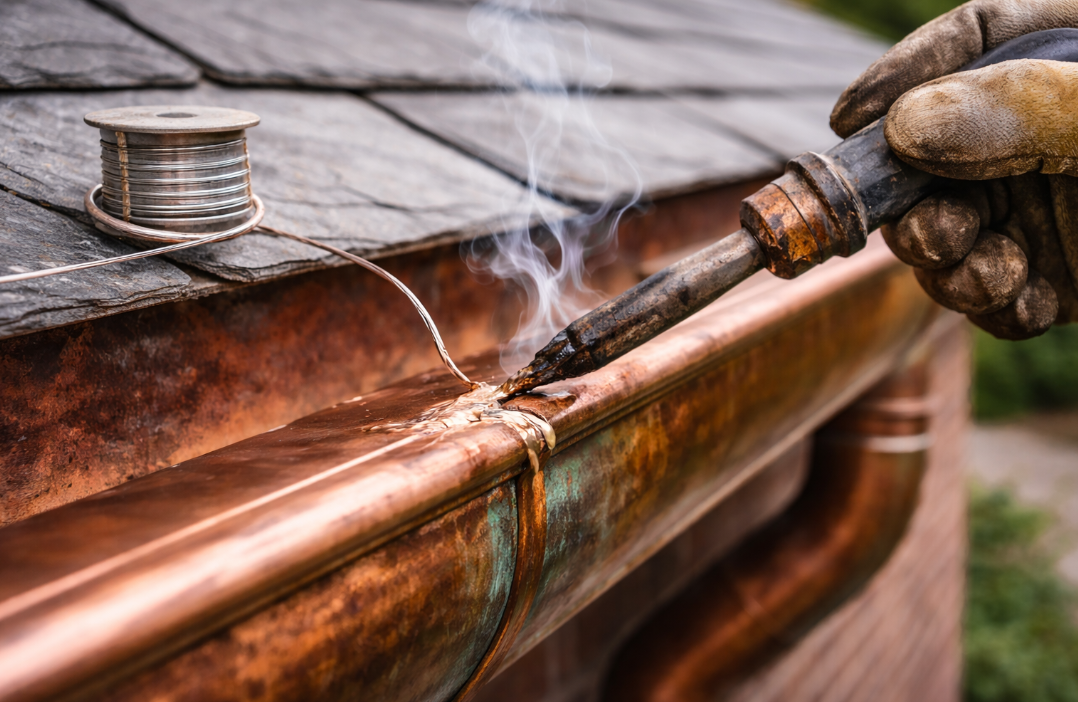
Historically, copper guttering was installed using soldered joints.
Lengths, angles, outlets and stop ends were joined permanently on site using heat and solder, creating a continuous metal run.
When done perfectly, a soldered joint:
-
is fully watertight
-
becomes part of the gutter itself
-
can last for decades
That’s why soldered copper has such a strong reputation.
However, soldering also comes with downsides that are often glossed over:
-
it’s slow and labour-intensive
-
it requires specialist skill
-
poor soldering fails early
-
joints are permanent and difficult to repair
-
future alterations usually mean cutting and re-soldering
Soldering works — but it’s unforgiving. One rushed joint can undermine the whole run.
How modern copper gutter systems actually work
Modern copper systems, such as those we supply, take a different approach.
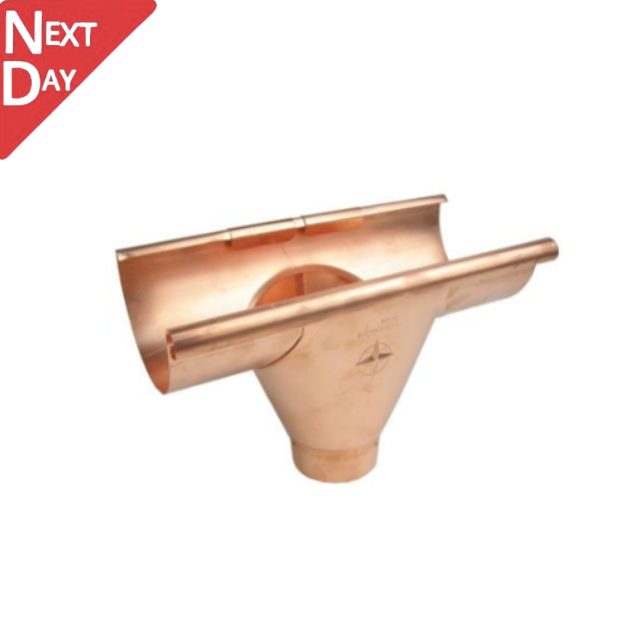
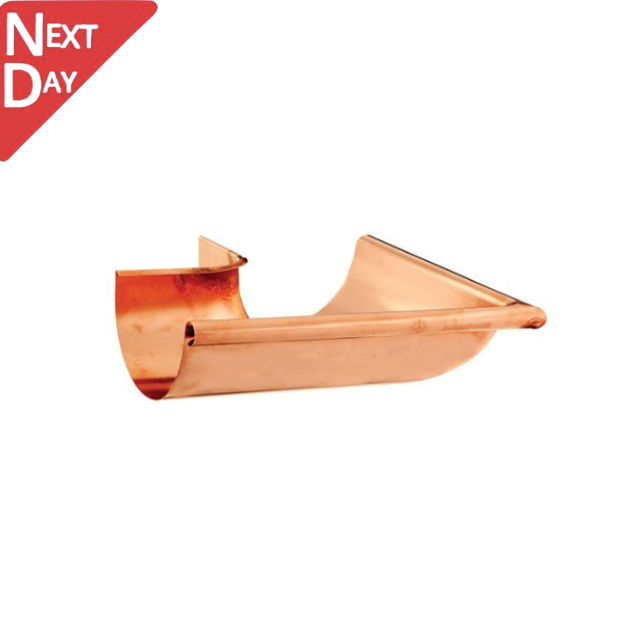
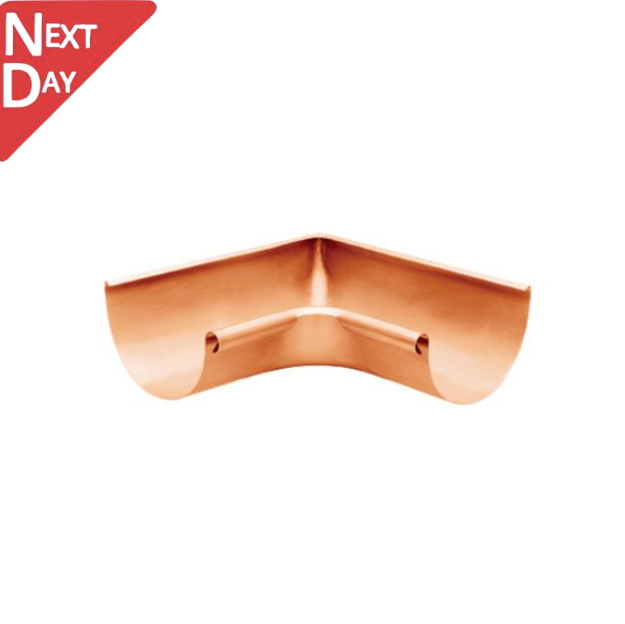
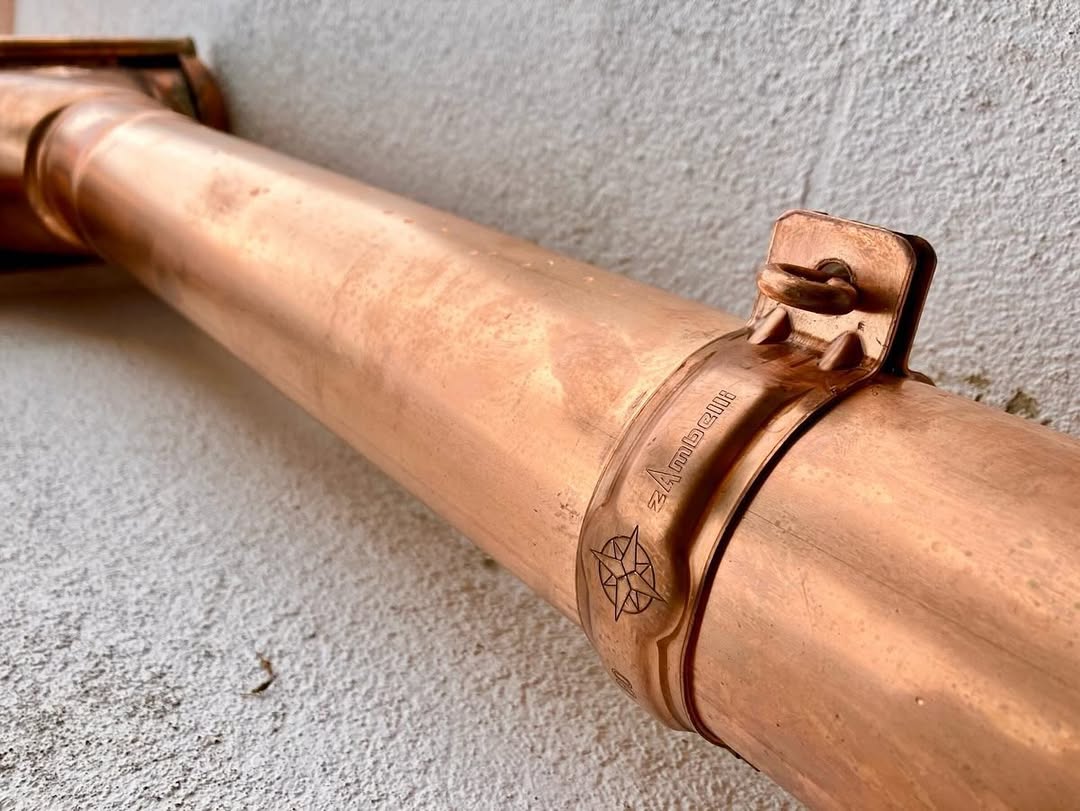
Instead of relying on solder, Zambelli copper guttering uses:
-
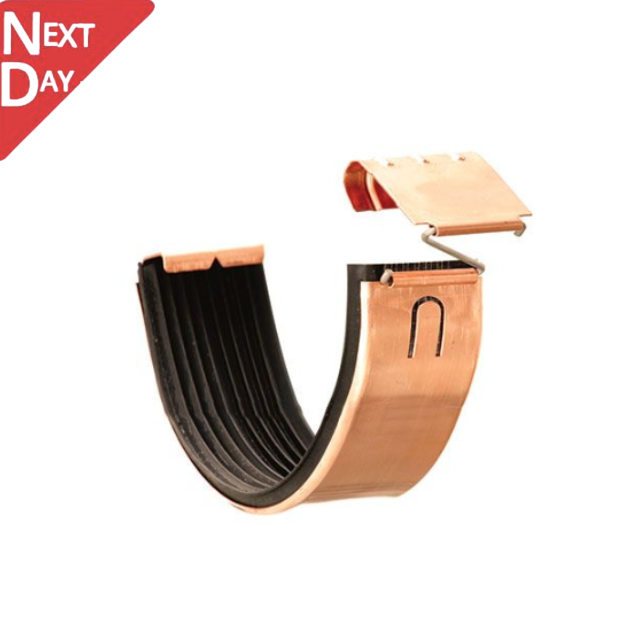
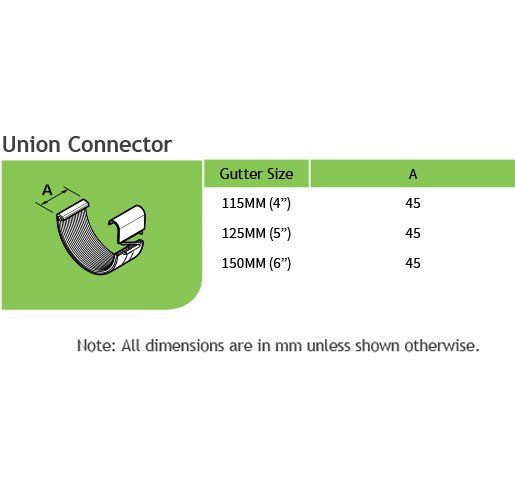
union connectors
-
EPDM rubber seals
-
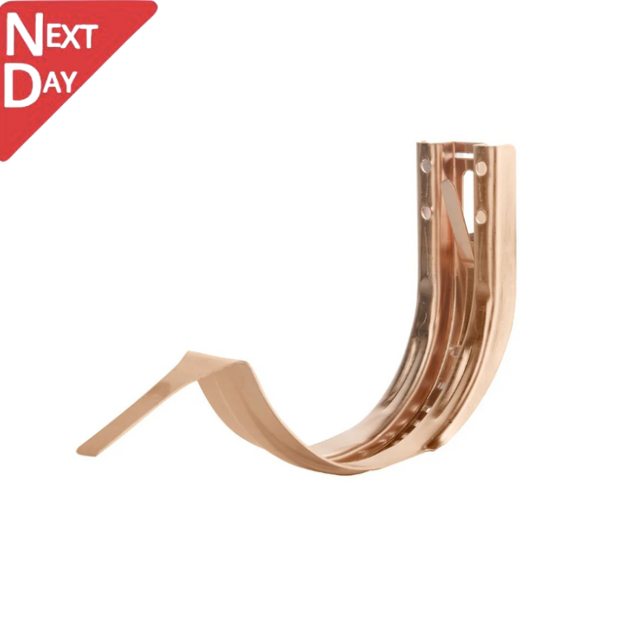
clip-together joints
These unions join gutter lengths, angles and fittings securely, creating a watertight seal without heat, solder, or site fabrication.
This isn’t a shortcut — it’s a deliberate design choice.

Why unions make copper guttering easier (and smarter)
Union-based copper systems offer several real-world advantages:
They are much easier to install.
No soldering, no torches, no specialist hot works. Installation is faster, cleaner, and more consistent.
They allow for natural thermal movement.
Copper expands and contracts with temperature changes. Rubber-sealed unions are designed to accommodate this movement, reducing stress at joints over time.
They make repairs and changes straightforward.
If a section is damaged or needs altering later, individual lengths can be removed and replaced without disturbing the entire run — something that’s far harder with soldered systems.
They are still 100% premium copper.
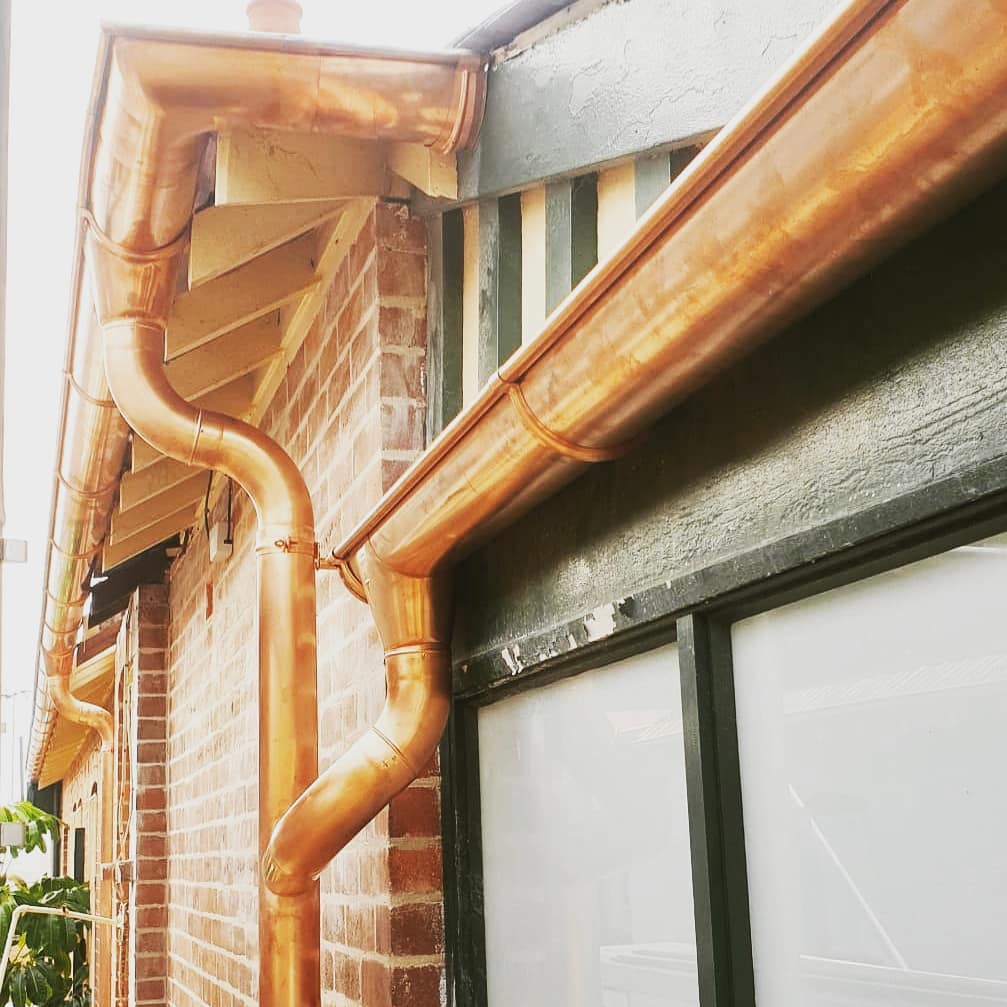
Once installed, the unions are discreet and the system still delivers the clean lines and visual quality people expect from copper guttering.
Does using unions mean sacrificing quality?
No. Not at all. Provided the system is designed properly (like Zambelli's).
A well-engineered union joint:
-
is fully watertight
-
doesn’t rely on sealants that dry out
-
stays flexible as the building moves
-
avoids the risk of cracked solder joints
In many cases, unioned copper systems are actually more forgiving long-term, particularly on buildings that experience movement or temperature extremes.
The key difference is this:
solder creates permanence; unions create resilience.
What about longevity?
Copper itself is doing most of the heavy lifting here.
Whether soldered or unioned, copper:
-
doesn’t rust
-
develops a protective patina
-
ages rather than degrades
-
can last many decades
Using unions doesn’t change those fundamentals. It simply changes how the system is assembled and maintained.

All of our copper rainwater is delivered next day!
Which copper system should you choose?
If you want:
-
traditional craftsmanship
-
fully permanent joints
-
and are happy with specialist installation
A soldered system can still make sense.
If you want:
-
easier installation
-
faster fitting
-
cleaner on-site work
-
simpler future repairs
-
and the same premium copper appearance
A union-based copper system like Zambelli is often the more practical choice.
Bottom line
Copper gutters don’t have to be soldered to be high quality.
Modern copper systems using rubber-sealed unions and clip-together joints deliver the durability, appearance and longevity copper is known for — while being easier to install, easier to maintain, and more adaptable over time.
If you’re choosing copper for the long haul, it’s worth choosing a system that works with the material, not against it.