There are plenty of copper gutter systems on the UK market. Some are very good. But after looking closely at what actually matters when you’re buying, fitting and living with a copper rainwater system, Zambelli gets a lot right.
It isn’t just the copper itself. The clever bit is the system around it.
You get proper 3m gutter lengths, matching copper downpipes, corners, outlets, brackets, stop ends and copper hoppers. More importantly, the parts are designed to work together without turning installation into a specialist metalworking job.
That matters because copper is already a premium material. You shouldn't then have to fight with the system just to get it on the building.
So, why do we rate Zambelli copper guttering so highly?
It Starts With Proper Copper
This sounds obvious, but it's worth saying.
If you're spending the money on copper rainwater goods, you probably want actual copper. Not copper-effect plastic. Not painted aluminium guttering. Not a brown coating that's supposed to vaguely resemble it from the pavement. Real copper has a character that those materials simply don't reproduce.
When Zambelli copper first goes up, it has that bright, warm metallic finish most people picture when they think of new copper. Then it starts to change.
Slowly.
The surface gets darker, the tone becomes richer and, over a much longer period, the familiar copper patina develops. Exactly how quickly that happens depends on the building and its environment, so don't expect every elevation to age at precisely the same speed.
That's part of the appeal.
You're not really buying a fixed colour. You're buying a material which changes with the property.
For customers specifically looking for that finish, our full copper guttering range is the place to start.

This image shows how REAL copper changes colour over time.
The Jointing System Is Probably Our Favourite Part
This is where Zambelli becomes much more interesting. A lot of people assume copper gutters need soldering. Historically, plenty did.
And soldering copper isn't necessarily a bad system. Properly done, it can produce excellent results.
The problem is the properly done bit.
Site soldering needs more skill, takes more time and makes alterations considerably more awkward. If you're paying for beautiful copper guttering, a rushed solder joint isn't exactly what you want holding the whole thing together.
Zambelli takes a different approach.
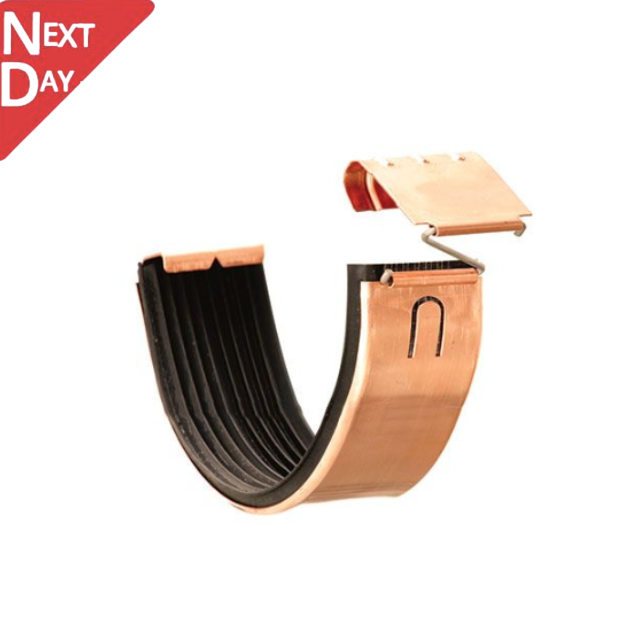
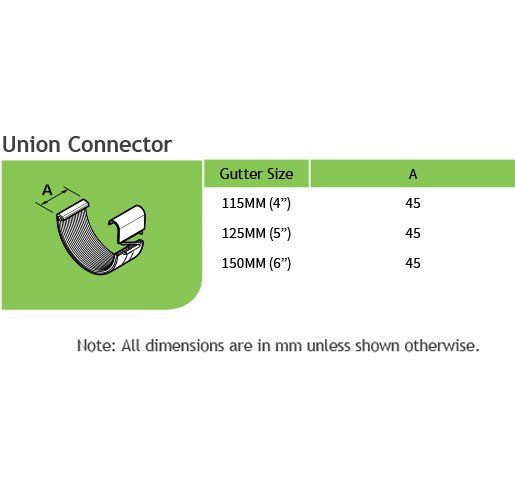
The standard gutter lengths use purpose-made copper unions with rubber seals. The gutter sections meet inside the connector and the union secures the joint.
No soldering the standard gutter joints.
No running silicone down every connection.
No blowtorch.
It's one of those features that doesn't sound particularly exciting until you're actually fitting the stuff.
Then it makes a lot of sense.
We've gone into this in more detail in our guide on whether copper gutters need to be soldered, because it's one of the questions we get asked most often.

The Stop Ends Are Nicely Thought Out Too
Stop ends are another small detail that can make a metal gutter system either pleasant or annoying to install.
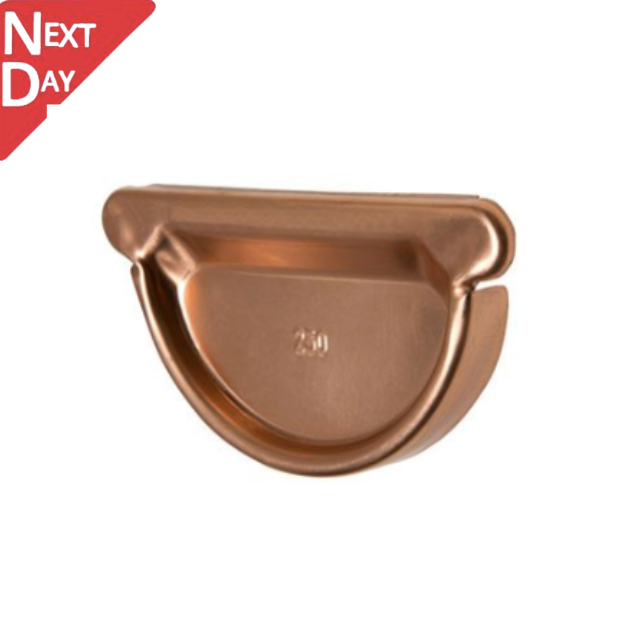
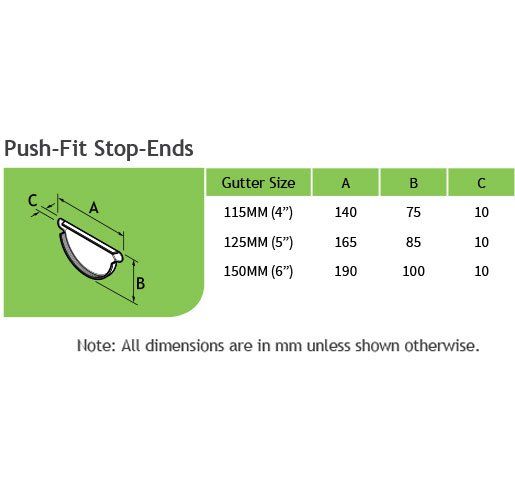
On the Zambelli copper system, the stop ends use an EPDM rubber seal and push into position. Again, simple.
You're not trying to fabricate an end on site or reach for sealant because the system hasn't really been designed around the installer. It's a recurring theme with Zambelli. Quite a few of the cleverest details are fairly mundane bits that simply make the job easier.
That is usually the sign of a well-developed rainwater system.
You Can Choose The Gutter Size Properly
Not every roof should have the same gutter.
Our Zambelli copper gutters are available in 115mm, 125mm and 150mm half-round sizes, giving you a useful spread for different roof areas and building types.
The 115mm system keeps the roofline fairly neat and can work really well on smaller residential buildings and extensions.
The 125mm is a useful step up and makes sense across a wide range of homes.
Then there's the 150mm system for projects where a bigger gutter is required.
And that's how we'd recommend choosing it.
Work backwards from the roof and drainage requirements. Don't just choose the biggest gutter because it looks more expensive.
The number and position of outlets matters too. So does the downpipe arrangement underneath.
If you're working from architectural drawings or you know the roof dimensions but aren't sure where to start, send them over to us. It's much easier to work through the system beforehand than discover later that the gutter and pipe arrangement don't make sense together.

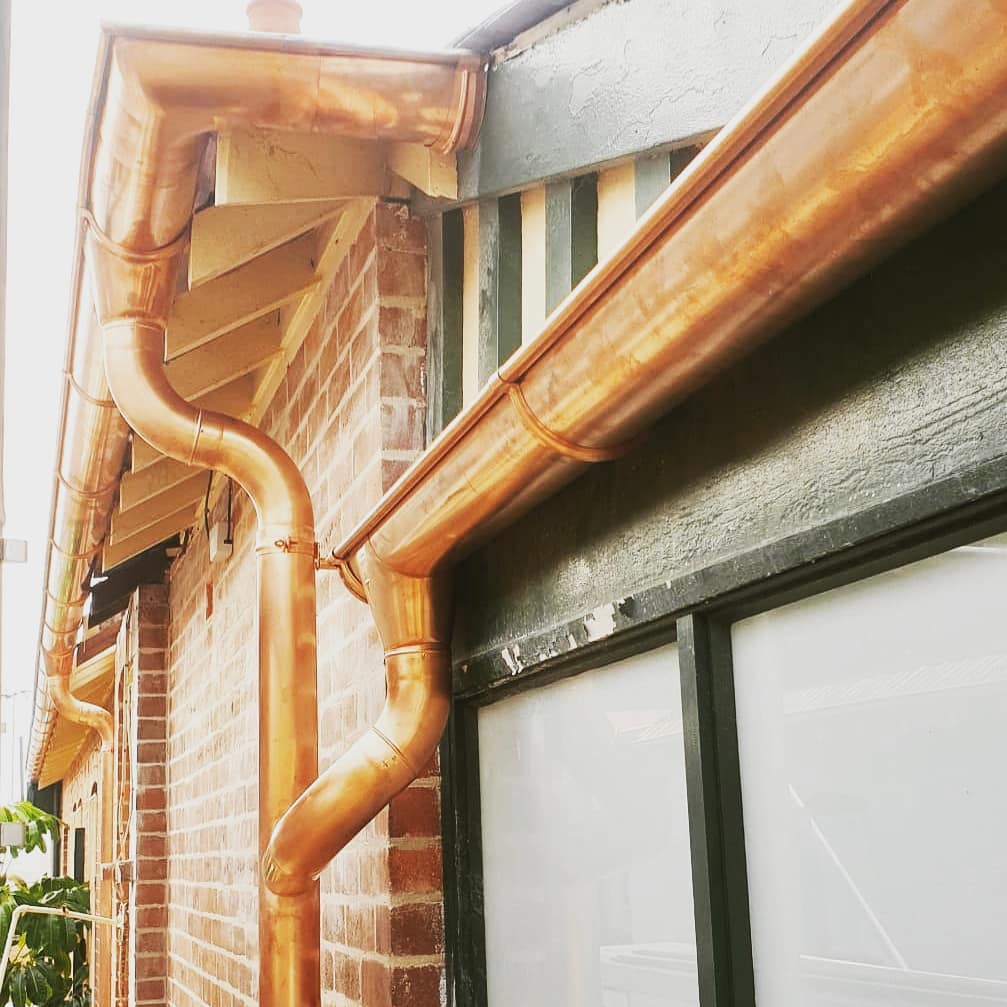
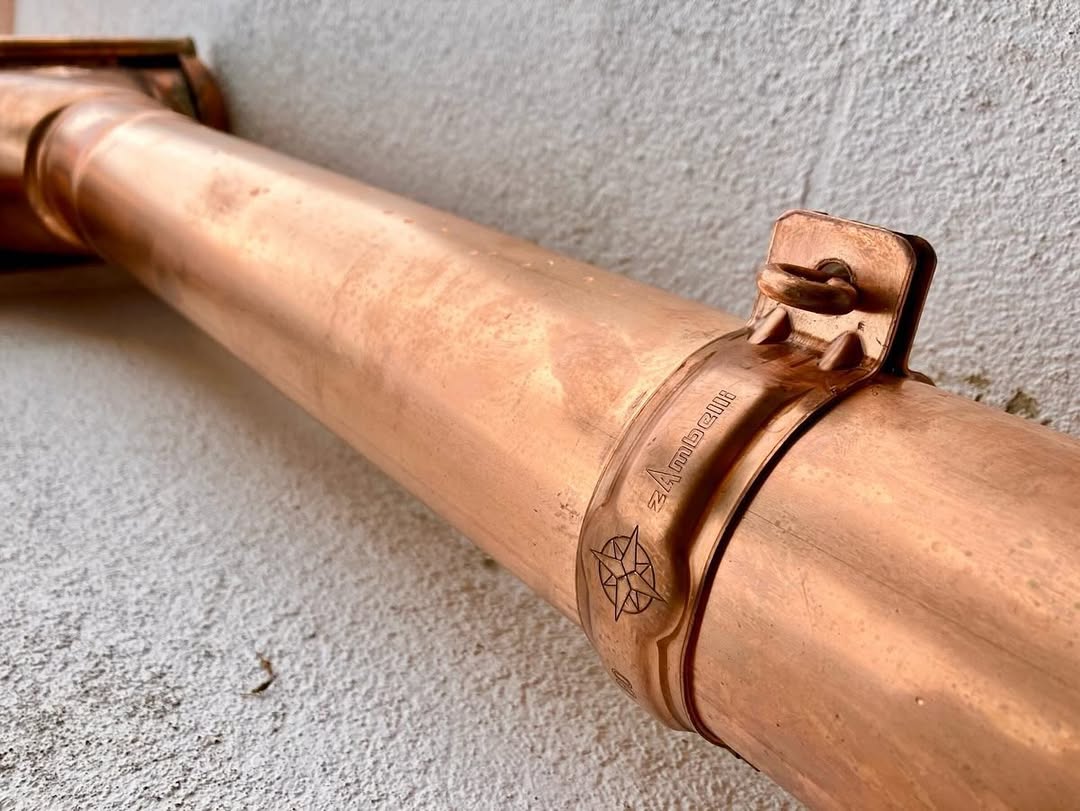
The Zambelli system in use on a UK Property.
The 3m Lengths Make A Difference
This is one of the less glamorous reasons we like the system, but it matters.
Zambelli copper gutter lengths are 3 metres long.
Longer sections generally mean fewer joints along a straightforward elevation. And on copper, where the finished roofline is often a major part of why the customer chose the material in the first place, fewer interruptions can make the whole system look noticeably cleaner.
The same thinking carries down the wall.
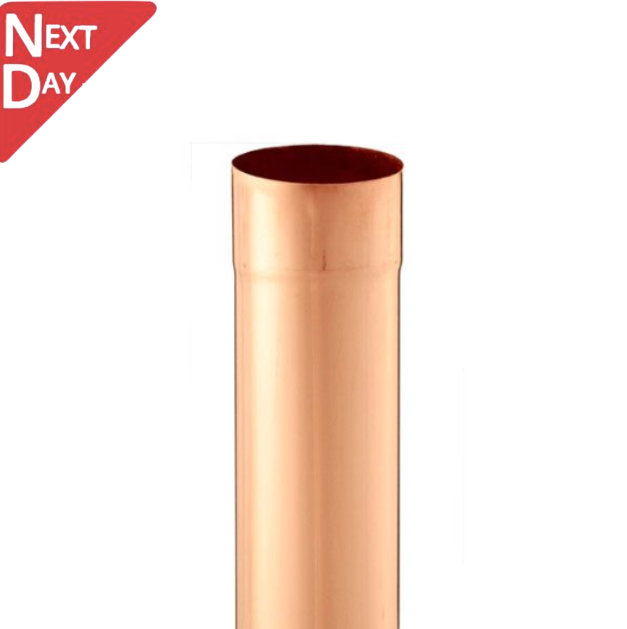
Our Zambelli copper downpipes are available in 1m, 2m and 3m lengths, so you've got much more flexibility when laying out the vertical drop.
That can be especially useful when you're trying to land a joint somewhere sensible rather than directly beside a window, architectural detail or awkward section of brickwork.
The Downpipes Are Properly Engineered As A System
The downpipe side deserves more attention than it normally gets.
You can buy a beautiful copper gutter and then completely spoil the job underneath it with badly matched pipework.
Zambelli's round copper downpipes are available in 80mm and 100mm diameters, with compatible bends, brackets, connectors, branches, offsets, shoes and other fittings.
Full pipe sections use a formed end, allowing one pipe to push into the next.
Again, there's no need for a separate socket between every full-length section.
If you cut a pipe and lose that formed end, that's when the loose copper connector comes in. It lets you reuse the cut section and continue the run properly.
It sounds like a tiny detail.
On site, it's a very useful one.
Offsets Don't Have To Look Like An Afterthought
Here's something that separates a nice rainwater installation from one that looks like it was figured out at 4pm on a Friday.
The downpipe very often doesn't line up perfectly with the gutter outlet.
Soffits project. Fascias move the gutter away from the wall. Brickwork changes depth. Roofs are rarely as simple as they appear in a product drawing.
That's why the fitting range matters.
With Zambelli you can use copper bends to bring the downpipe back towards the wall, including pairing bends to create an offset.
There is also a fixed offset available in the 80mm range for a straightforward 60mm projection from the wall.
So you aren't buying a gutter system and then improvising the difficult bit.
You can actually detail the complete vertical run before ordering.
The Corners Are Much Nicer Than Making Them On Site
Corners are another area where good manufacturing pays off.
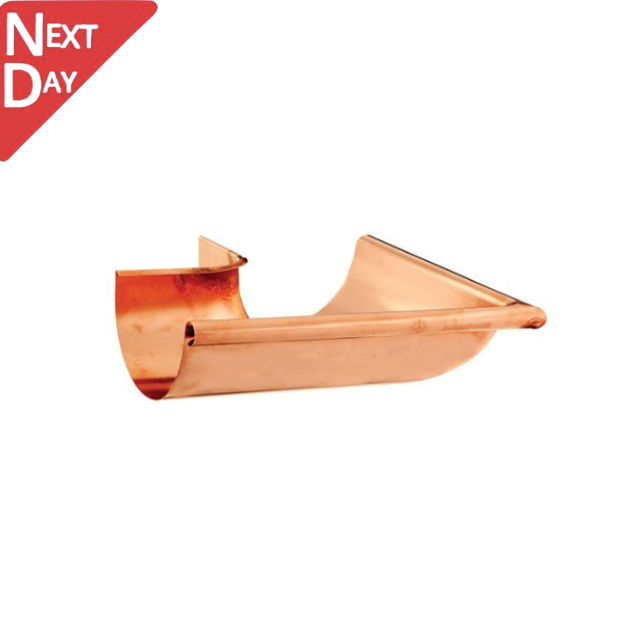
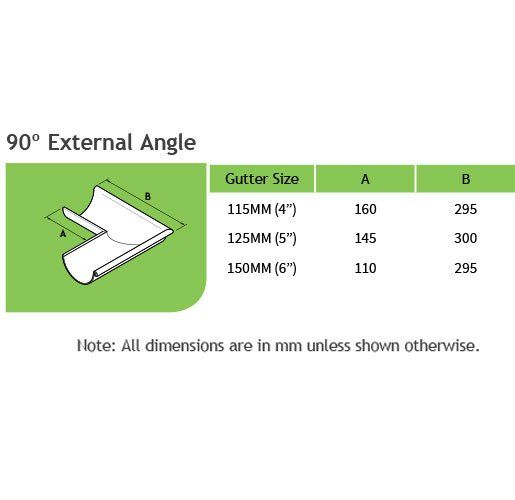
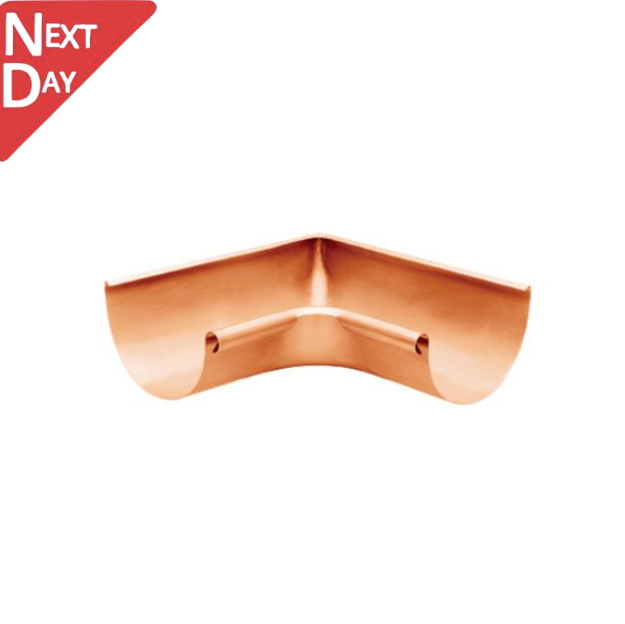
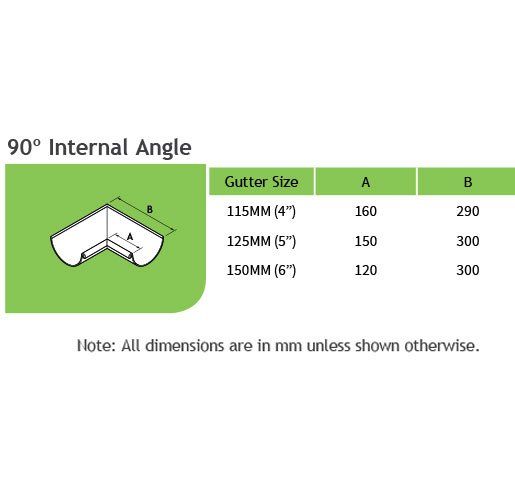
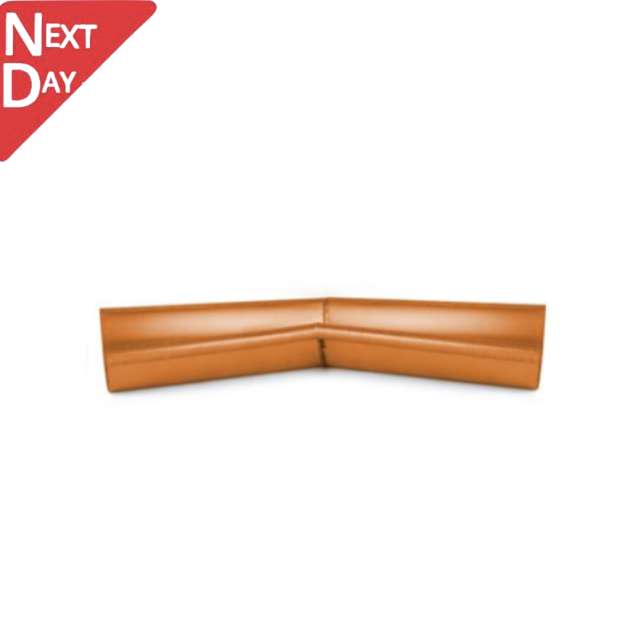
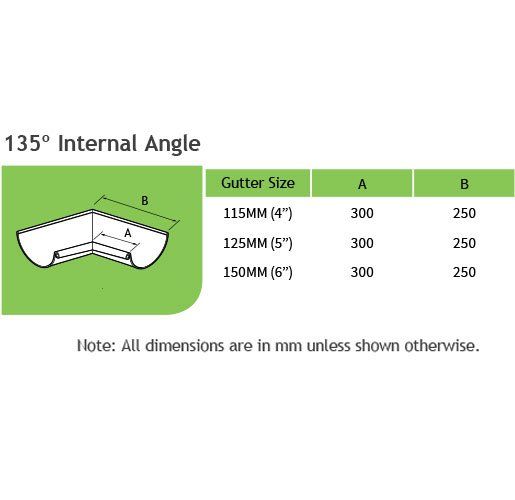
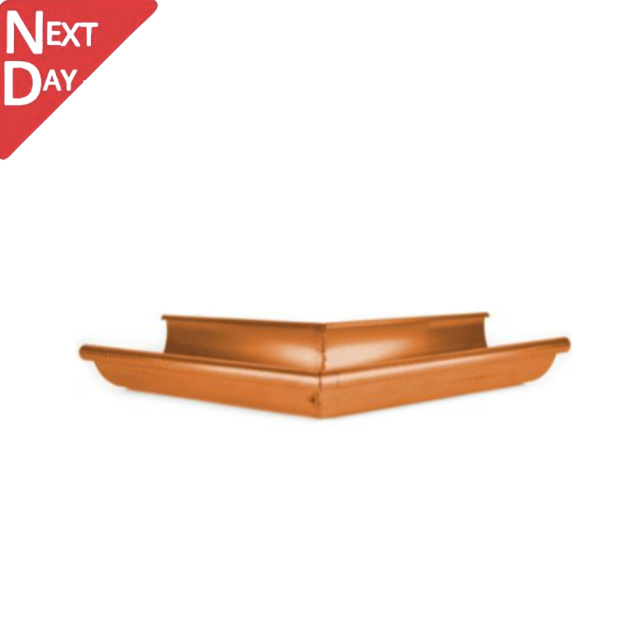
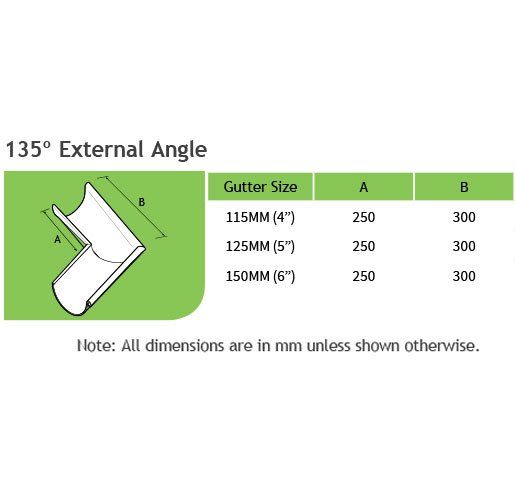
Rather than expecting an installer to fabricate every detail, matching internal and external copper gutter angles are available as part of the system.
That gives the finished run a much more deliberate appearance, particularly on properties with several elevations.
There are also different angle options across the range, which helps when you're dealing with rooflines that aren't simply four 90-degree corners.
On a premium material such as copper, this stuff matters.
Nobody spends serious money on the gutter lengths because they want the corner detail to look improvised.

Wrap-Around And Prefabricated Outlets Give You A Choice
We like systems that don't force you into one way of doing every job.
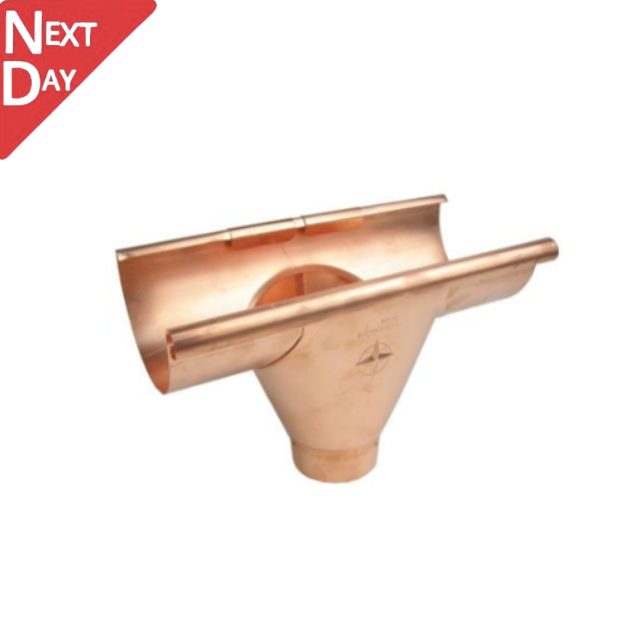
The Zambelli range gives you different outlet approaches. A wrap-around outlet can be positioned where you need the downpipe, giving the installer flexibility when setting out the run.
A prefabricated outlet section, on the other hand, already has that detail formed for you.
Which is better?
Neither, universally.
If the downpipe has to land in a very particular place because of windows, doors or drainage below, the flexibility of the wrap-around option can be useful.
If the layout is straightforward and you want to minimise fabrication on site, the prefabricated option is really neat.
That's the sort of choice we like seeing in a proper system.
It Works As A Complete Rainwater System
This, more than anything, is probably why we rate Zambelli.
You aren't buying a lovely gutter and then being left to work out everything else yourself.
A complete installation can include:
- copper gutter lengths
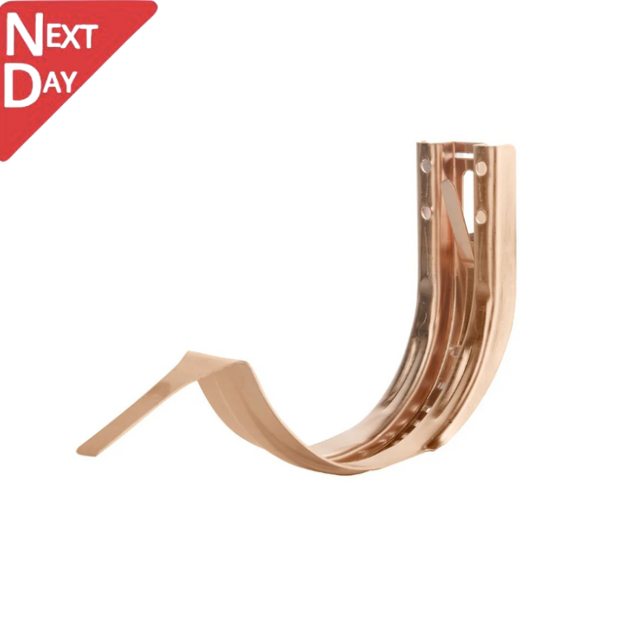
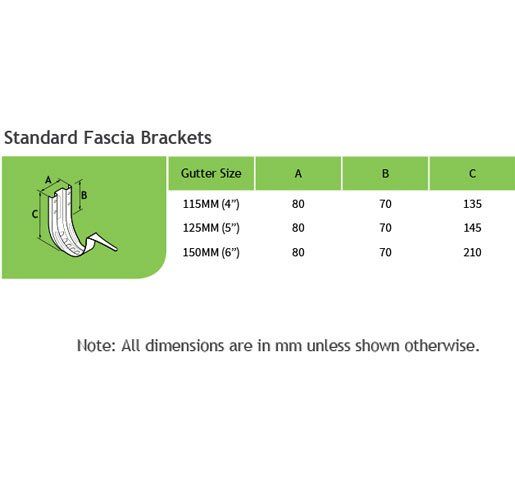
- fascia or rafter brackets
- gutter unions
- stop ends
- internal and external angles
- wrap-around or prefabricated outlets
- copper downpipes
- pipe brackets
- bends and offsets
- branches
- loose connectors
- shoes
- diverters
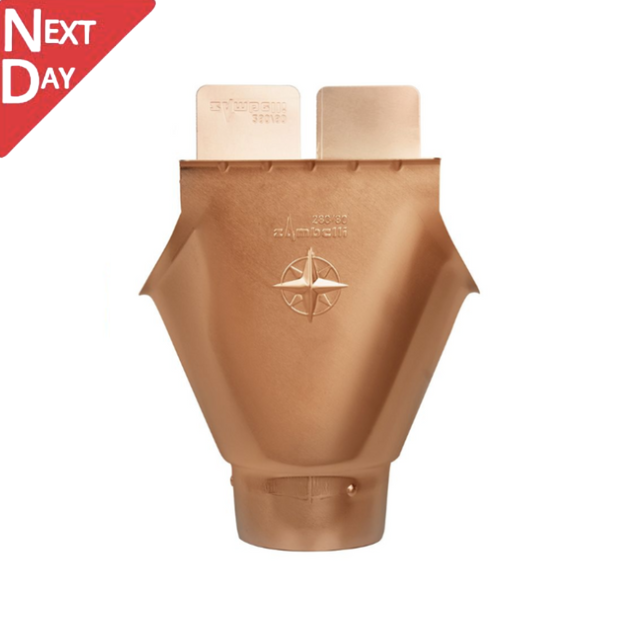
- hopper heads
That's a proper system.
And it means you can keep the visible copper consistent from the roof edge right down the elevation.
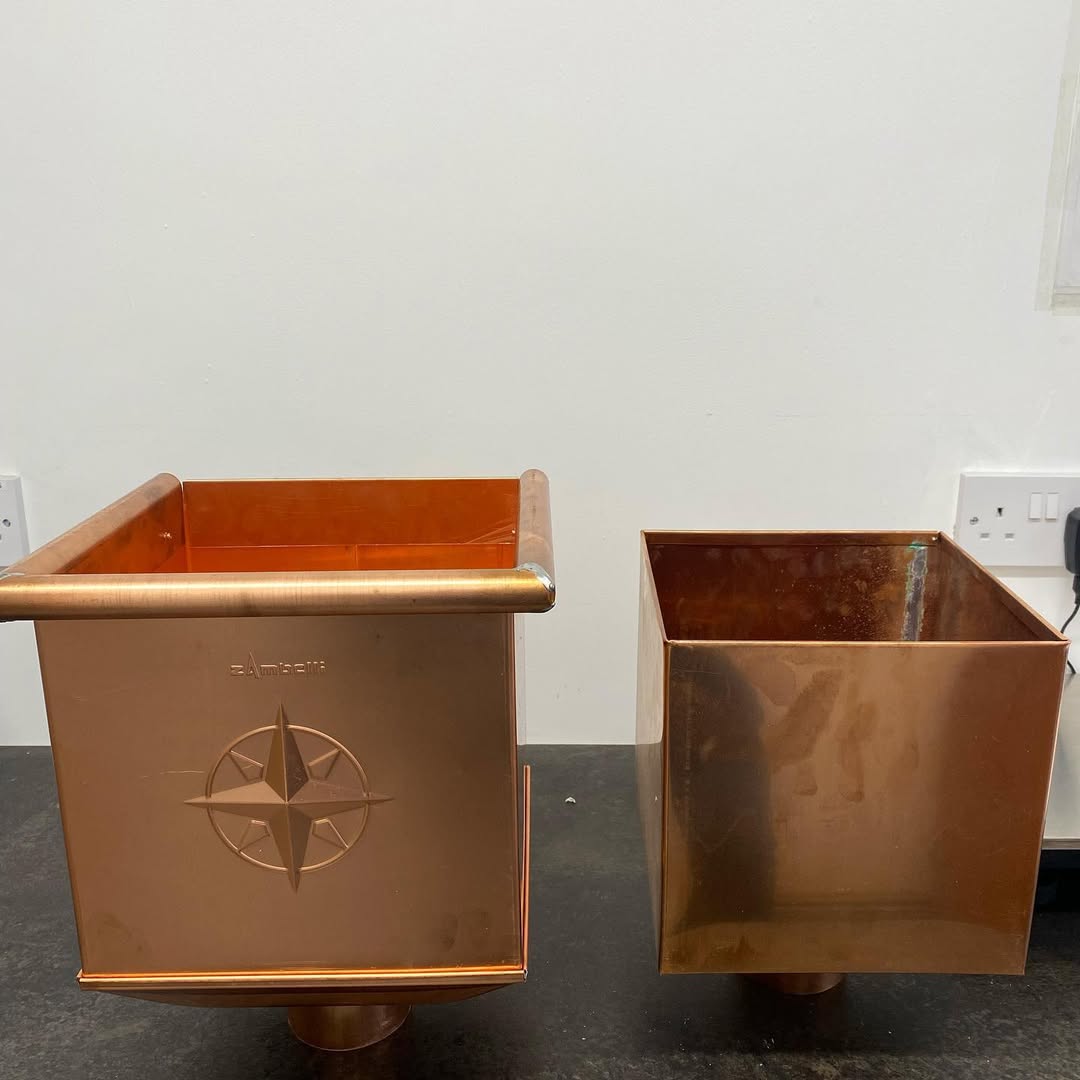
Where the drainage arrangement needs a rainwater head, have a look at our copper hoppers too. We carry plain and more decorative designs in different outlet sizes, so the hopper doesn't need to become the odd component that doesn't match everything around it.

The Hopper Options Are Particularly Good On The Right Building
Not every property needs a hopper. But when you do need one, copper makes it much more than a bit of plumbing.
A plain copper hopper can look brilliant on a contemporary build where you want the rainwater goods to form part of the exterior detailing.
An ornate hopper does something completely different. On an older house, conversion or heritage-style project, it can become a proper feature.
We've separated these out into a dedicated copper hopper collection, which makes it much easier to compare the available shapes and outlet sizes without digging through hundreds of gutter fittings.
The important thing is to choose the hopper around the pipe below it.
An 80mm downpipe needs the appropriate outlet. Same story with 100mm.
Don't choose entirely by the shape on the front.
Zambelli Copper Is Surprisingly Straightforward To Install
“Copper guttering” sounds specialist.
And it is a premium metal system.
But that doesn't mean the installation needs to be unnecessarily complicated.
That's one of Zambelli's strongest points.
You have:
rubber-sealed gutter unions rather than soldered standard joints;
push-fit stop ends;
formed downpipe connections;
proper prefabricated corners;
purpose-made outlets;
and all the matching brackets and pipe fittings.
There is obviously still a right way and a wrong way to install it.
Brackets need setting out properly. The gutter needs the correct fall. Movement needs to be allowed for. Cut edges and joints need dealing with properly, and drainage capacity still needs planning.
But the actual system doesn't create complexity for the sake of it.
That's a big reason we recommend it.
It Looks Good On More Than Period Properties
Copper often gets pigeonholed as a heritage material.
It does look fantastic on older brick, stone and traditional roofs. No argument there.
But we'd actually say some of the best copper projects are contemporary ones.
Put clean half-round copper guttering against dark cladding, zinc roofing, timber, render or modern brickwork and the contrast can be brilliant.
Especially when the copper is new.
Then, as it starts to darken and weather, the building changes with it.
That's why we wouldn't describe Zambelli copper as simply a restoration product.
It's an architectural choice.
If the rainwater goods are going to be visible anyway, sometimes it's worth making them part of the design rather than trying to hide them.
There's No Paint To Peel Off!
This is another important difference between natural copper and coated systems.
The visual finish isn't being created by a layer of paint.
The copper is the finish.
So you don't have the same issue of a painted exterior gradually fading, flaking or needing to be recoated just to maintain the original appearance.
The trade-off is that copper will change colour.
Quite dramatically, eventually.
If you want something that looks exactly the same in 20 years as the day it was fitted, that's worth knowing before you spend the money.
But if the changing surface is part of why you're choosing copper in the first place, it becomes one of the system's biggest attractions.
Don't Mix Copper With Everything
This is one bit of copper specification that deserves more attention.
Copper isn't a material we'd randomly mix into another metal rainwater system just because two components happen to fit.
The metals around it matter.
That's another argument for buying the gutters, outlets, pipework and fittings as a coordinated system rather than assembling a rainwater system from whatever components happen to have the closest measurements.
It looks better.
More importantly, you know what has been designed to work together.
If you're replacing only one part of an existing rainwater system and you're unsure what the surrounding material is, send us photographs first rather than assuming.
Stock Availability Is A Pretty Big Advantage
Premium architectural rainwater goods often come with one annoying downside:
lead time.
It's not unusual to find the right product and then discover you're waiting weeks for it.
That's another reason we've put so much emphasis on Zambelli.
We stock the core 115mm and 125mm copper guttering and 80mm copper downpipe system, with next working day delivery available on stocked products when ordered before 11:30am.
The larger or less common components can have longer lead times, so it's always worth checking before promising an installation date.
But for a genuine copper rainwater system, being able to get many of the main components quickly is a serious advantage.
You can browse current products and availability in our copper guttering and copper downpipes ranges.
So, Is Zambelli The Best Copper Guttering System?
“Best” always depends a little on the project.
If somebody specifically wants a hand-soldered bespoke gutter fabricated by a specialist metalworker, that's a different product entirely.
But if you're looking for a complete, beautifully made copper rainwater system that can actually be specified and installed without making the job unnecessarily difficult, Zambelli is very hard to beat.
That's the important distinction.
You're getting real copper, but you're also getting the engineering around it:
3m gutter lengths.
Multiple gutter sizes.
80mm and 100mm downpipes.
Dry-jointed gutter unions.
Push-fit pipework.
Proper corners.
Choice of outlets.
Matching hoppers.
Branches, bends, offsets, connectors and brackets.
And a system where those components have actually been designed to go together.
For us, that's what makes the difference between buying copper gutters and buying a genuinely well-thought-out copper rainwater system.