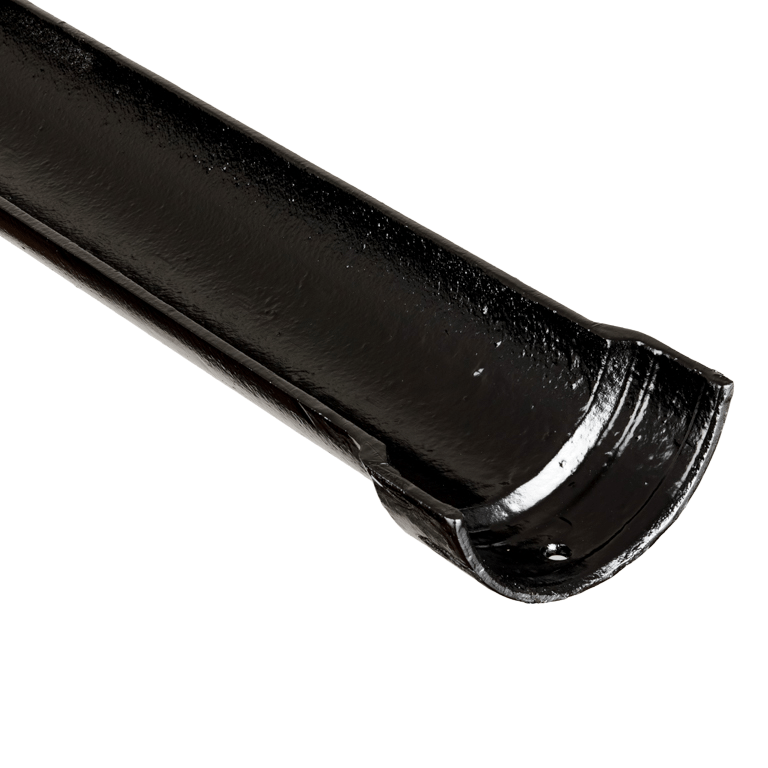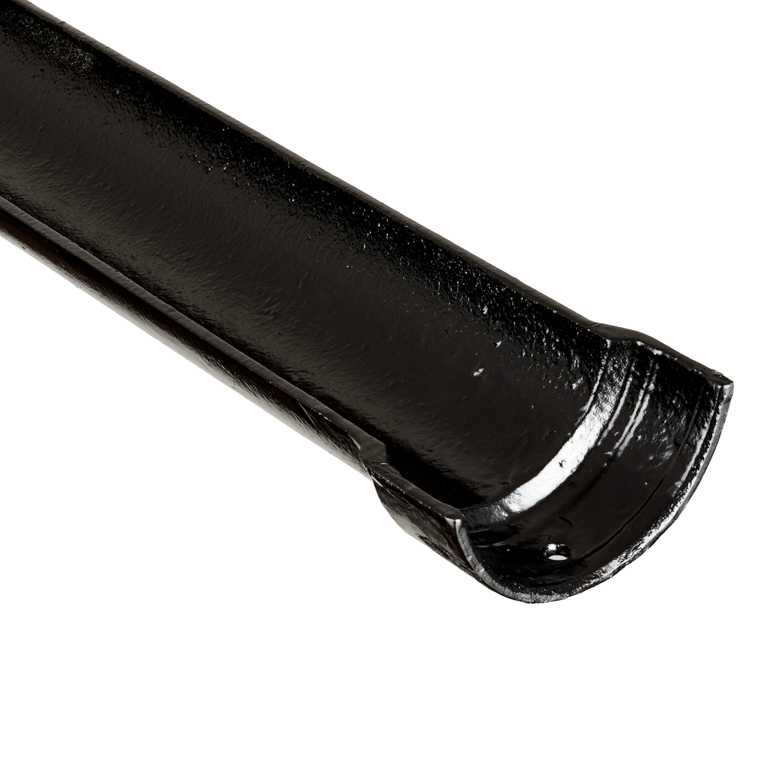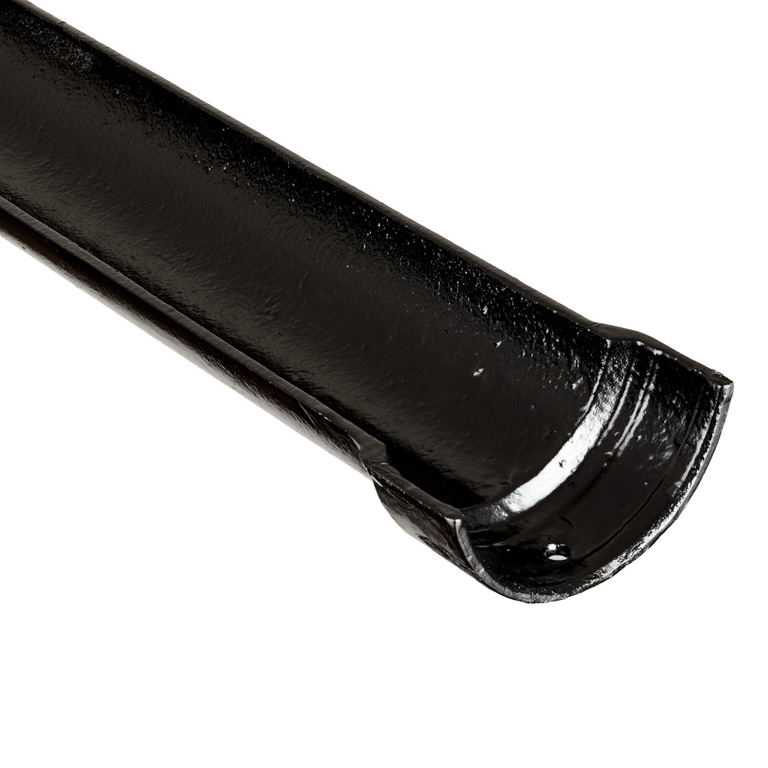
Cast iron guttering looks solid. And to be fair, it usually is. Many systems on UK homes are 50, 70, even 100 years old.
But when it starts dripping, flaking or staining brickwork, it’s easy to assume the worst.
The truth? Most cast iron gutter problems aren’t catastrophic. They’re usually one of a handful of very fixable issues - things like failed joints, surface rust, blocked outlets, or sagging brackets.
This guide will walk you through:
-
How to diagnose what’s actually wrong
-
How to repair leaking joints properly
-
How to fix small rust holes and cracks
-
How to deal with sagging sections
-
When to repair and when replacing a section is the smarter call
No fluff. No panic. Just practical advice that works on real UK houses. We also produced a FULL master guide on cast iron rainwater if you want to have a read.
Step 1: Diagnose the Problem Before You Touch Anything
The biggest mistake people make is assuming they know what’s wrong before they’ve properly looked.
Here’s a quick reality check table.
| What You’re Seeing | What It’s Probably Caused By | Likely Fix |
|---|---|---|
| Dripping at a joint | Failed seal or old putty | Split and reseal joint |
| Water overflowing in heavy rain | Blocked outlet or downpipe | Clear blockage |
| Small rust hole | Surface corrosion | Clean, treat and patch |
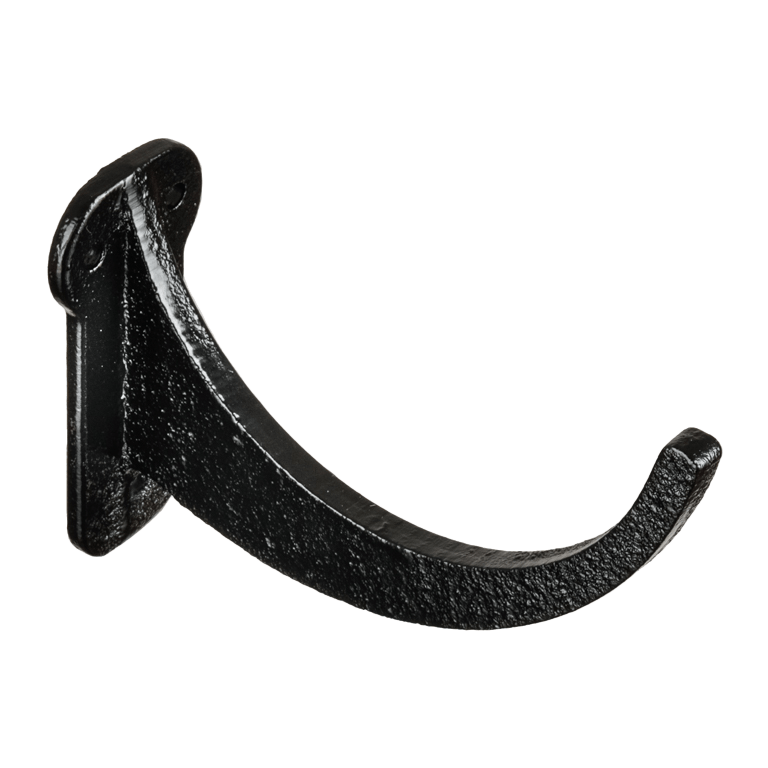
| Sagging section | Loose or failed bracket | Refix or replace bracket |
| Crack near outlet | Metal fatigue | Section replacement |
In the UK, around 80% of “leaks” are either:
-
Failed joints
-
Blockages
-
Or sagging causing water to pool
Before you buy anything, get up there (safely) and have a proper look.

Tools & Materials You’ll Probably Need
Cast iron repairs are not complicated, but preparation is actually important, especially when painting it.
For leaking joints:
-
Spanner or socket set
-
Wire brush
-
Scraper
-
Exterior low-modulus sealant or traditional linseed putty
-
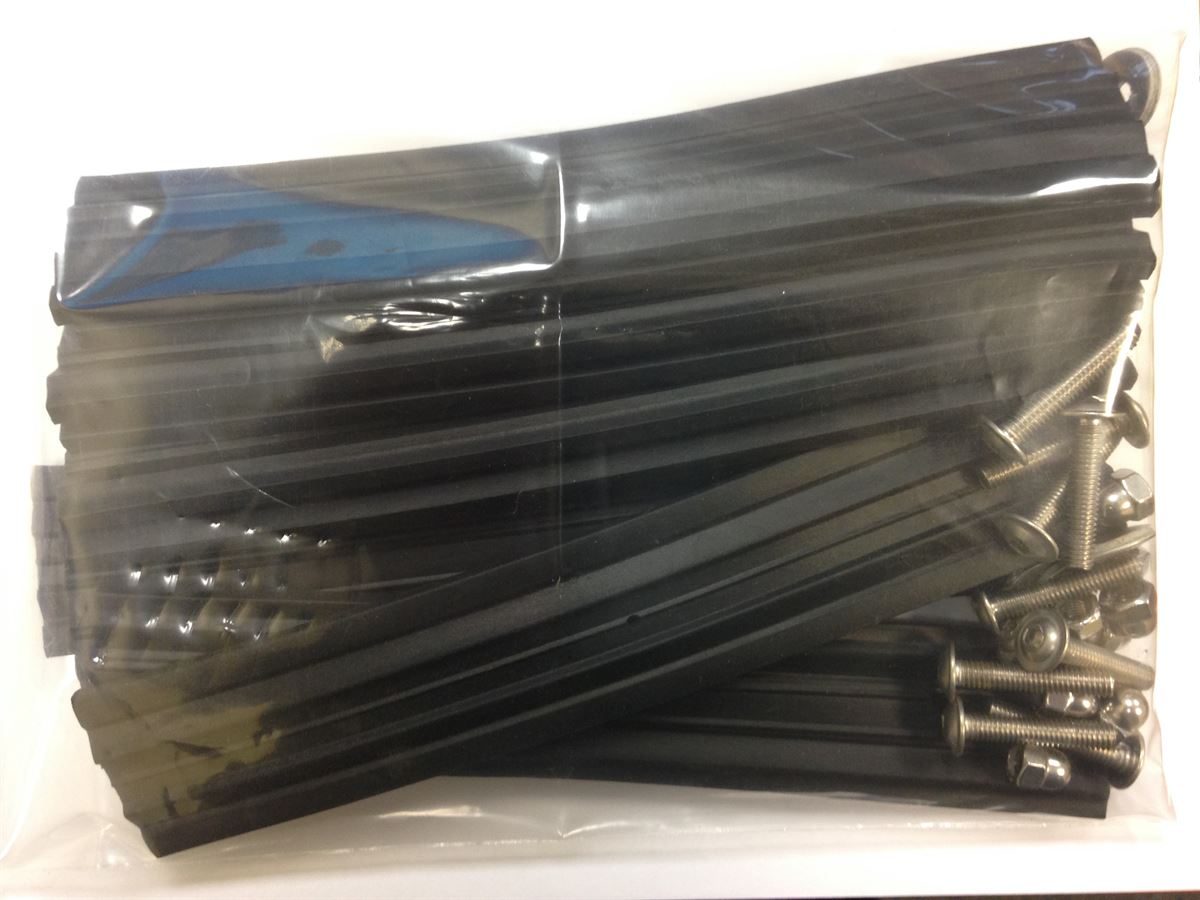
Replacement stainless bolts (old ones often snap)
For rust holes:
-
Wire brush or drill-mounted brush
-
Rust converter
-
Metal epoxy repair putty
-
Metal primer
-
Exterior metal paint
General:
-
Eye protection
-
Dust sheet for debris
One thing to understand early: most gutter repairs fail because people skip cleaning and surface prep.
Cast iron does not forgive laziness!
How to Repair a Leaking Cast Iron Gutter Joint
This is by far the most common issue.
Over time, the original putty or sealer that is present between the cast iron gutter sections will start to deteriorate. It is exposed to constant expansion and contraction due to temperature variations, as well as years of wetting and drying and freezing and thawing during British winters.
What was once flexible and watertight is now brittle and cracked. The cracks get bigger. Meanwhile, the bolts that are holding the joints together can become loose over time due to expansion and contraction of the metal or corrosion of the bolts. You can read more about causes of corrosion with cast iron rainwater systems here.
It does not take a wide opening for a leak to occur; a hairline opening is enough for water to start working its way into a gutter system. Once water is working its way into a gutter system, it will only get worse over time, dripping and staining brickwork and worsening with each and every rainfall.

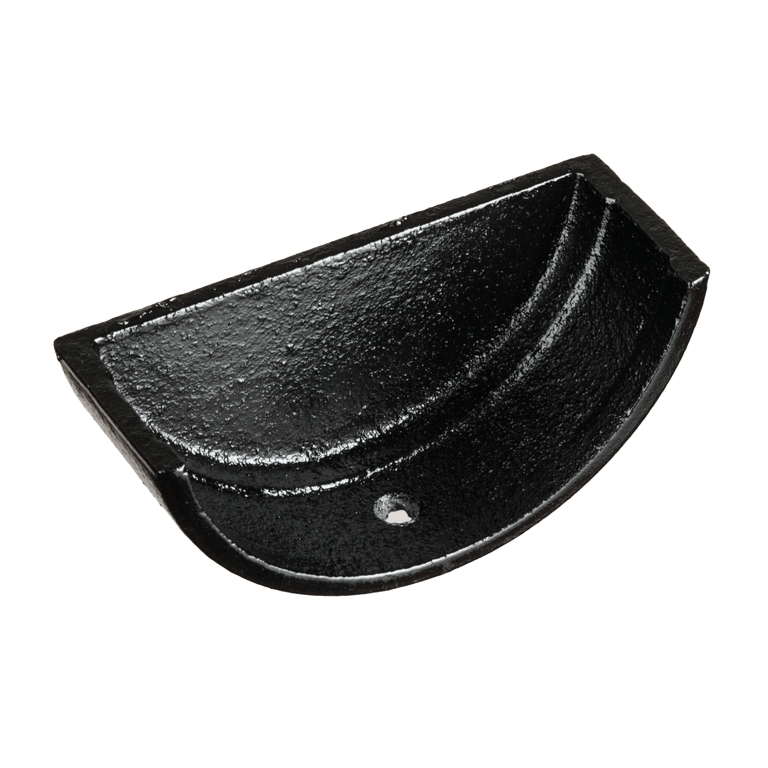
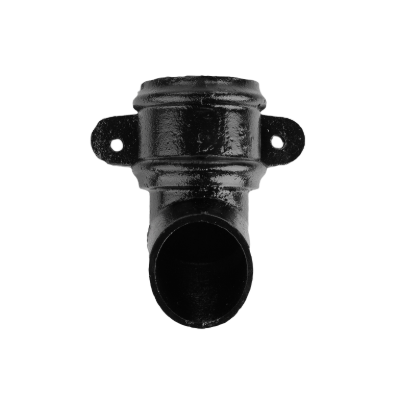
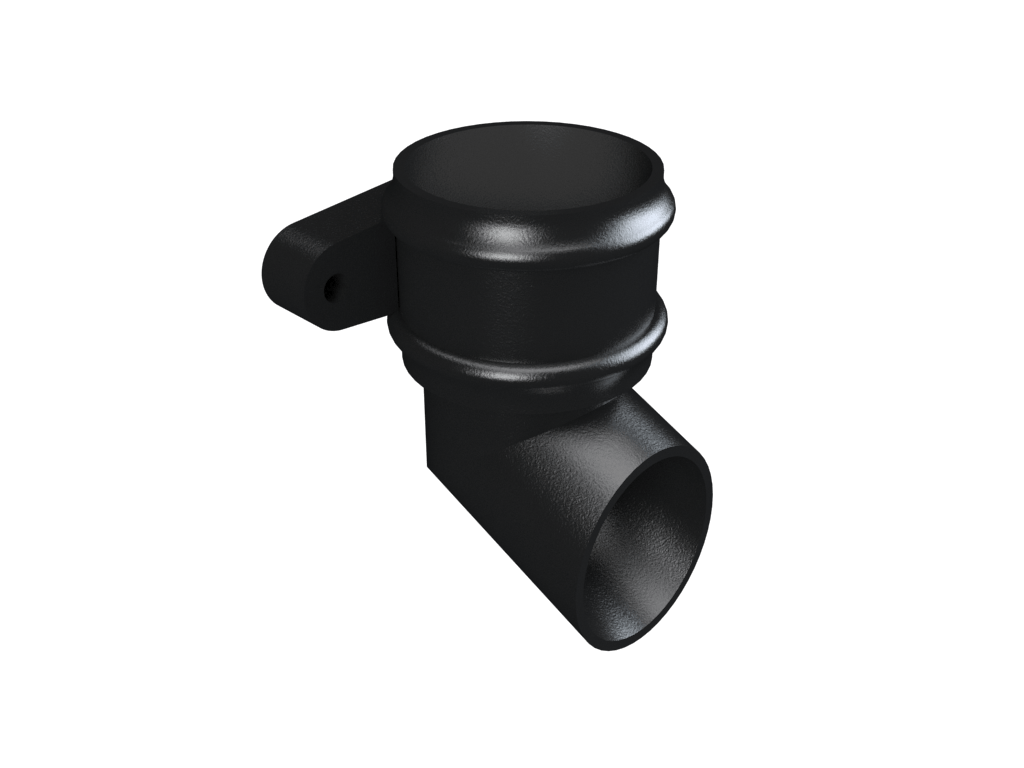
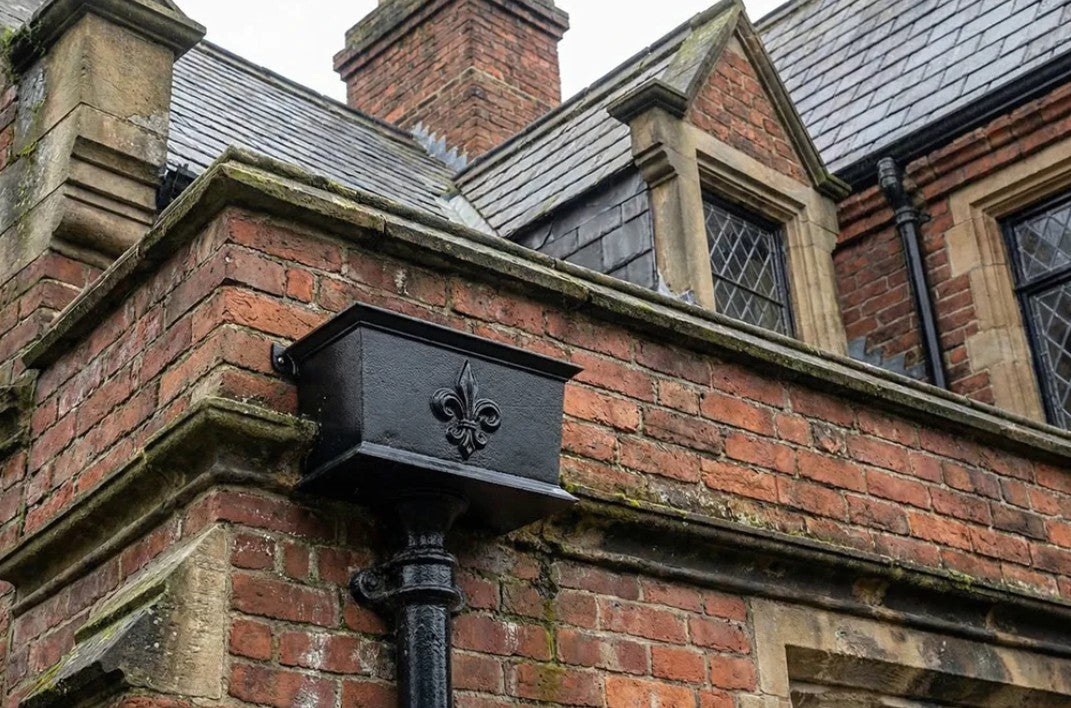
A cast iron hopper on a UK heritage building.
The proper way (not the “smear it and hope” way)
-
Clear debris first
Remove leaves and muck so you can see what you’re doing. -
Loosen the joint bolts carefully
Be prepared for resistance. Spray penetrating oil if needed. If bolts shear off, you’ll need replacements. -
Split the joint
If possible, separate the two sections slightly so you can remove old sealant properly. -
Remove all old material
Scrape and wire brush until you’re back to clean metal. We have a more detailed guide on cleaning cast iron gutters here. -
Dry thoroughly
This is critical. Damp metal ruins adhesion. -
Apply fresh sealant or putty
A modern low-modulus polymer sealant works well. Traditionalists may prefer linseed oil putty on period properties. -
Reassemble and tighten evenly
Don’t over-tighten — you can stress the casting. -
Prime and repaint the joint
If you simply run sealant over the outside of a dirty joint, it might last one winter. And that's a maybe!
How to Repair Rust Holes in Cast Iron Guttering
Rust is inevitable. What matters is how deep it’s gone.
First, assess the damage
Tap gently around the area with a screwdriver handle. If it sounds solid and feels firm, you’re likely dealing with surface corrosion.
If it flakes or crumbles easily, the metal may be too thin to trust long-term.
For small holes or pitting:
-
Wire brush the area back to bare metal
-
Remove all loose rust
-
Apply rust converter
-
Allow it to cure fully
-
Use a metal epoxy putty to fill the hole
-
Sand smooth once hardened
-
Prime and repaint
Done correctly, this can extend the life of the section significantly.
But be honest with yourself - if the inside of the gutter is heavily corroded, patching is buying time, not solving the root problem.
Fixing Sagging Cast Iron Guttering
If water sits in the gutter instead of running towards the outlet, something’s wrong with the fall.
Cast iron is heavy. Brackets take a beating over decades.
Check for:
-
Loose brackets
-
Rotten fascia boards
-
Incorrect fall
-
Missing fixings
Gutters should have a gentle slope towards the downpipe — not dramatic, just enough to encourage flow.
If brackets are loose:
-
Tighten them
-
Replace damaged ones
-
Check the condition of the timber behind them
Sometimes the fascia board is the real issue, not the gutter.
Fix the structure first. Then re-secure the gutter properly.
Overflowing in Heavy Rain? Check for Blockages First
This gets misdiagnosed constantly.
If water spills over during heavy rain but the gutter isn’t cracked, you likely have:
-
Leaves blocking the outlet
-
Moss buildup
-
Downpipe obstruction
Clear the gutter fully. Flush it with a hose. Watch where the water goes.
If it backs up, the downpipe is blocked.
Don’t start sealing joints until you’ve ruled this out.
When to Repair vs When to Replace
This is where honesty matters.
Repair is absolutely fine when:
-
The damage is localised
-
The metal thickness is still good
-
The majority of the system is sound
-
Brackets are stable
Replacement becomes smarter when:
-
Multiple sections are rusting through
-
Internal corrosion is widespread
-
Joints repeatedly fail
-
Sections are warped or cracked badly
-
The system is nearing end of life
Cast iron can last decades — but not forever.
Sometimes replacing one section is more cost-effective than repeatedly patching it.
How to Repaint Cast Iron Guttering Properly
If you’re already repairing it, protect it properly.
-
Remove all flaking paint
-
Wire brush rusted areas
-
Apply rust inhibitor
-
Prime with a metal primer
-
Apply two coats of exterior metal paint
Micaceous iron oxide paints are popular because they offer good protection and suit period properties.
The biggest mistake? Painting over damp metal or loose rust.
That just traps moisture underneath.
Safety: When to Stop and Call a Professional
Be realistic about access and the risks involved. Gutter repairs may seem simple, but you are working at heights, often leaning slightly outwards, and dealing with heavy cast iron guttering that does not forgive mistakes.
If any of the following are true, it may be best to think about calling in the professionals:
- The guttering is over two storeys high
- You don’t have stable ladder footing
- The roof tiles are old, brittle, or easily dislodged
- The brackets are set deeply into old brick or stonework
- The property is listed or in a conservation area.
Cast iron guttering is very heavy – much heavier than plastic alternatives. A loose section of guttering can weigh much more than you might think. If it does come loose while you are undoing the bolts to take it down, it will pull you off balance. Worse still, it could drop down and damage the property or injure someone underneath.
And then there is the other, less obvious, factor – the guttering may have old fixings that snap unexpectedly, the brackets may crumble, or the fascia may give way. What you set out to do as a simple re-sealing job may turn out to be structural work in the end.
There is no shame in saying that the job is not worth the risks involved. Paying out for professionals to do the job safely is likely to be far cheaper than the cost of an accident or the damage caused by something coming loose.
Frequently Asked Questions
Can you repair cast iron guttering without replacing it?
Yes, in most cases. Joint failures, minor rust holes and sagging brackets are all repairable if the metal is still structurally sound.
What sealant works best on cast iron gutters?
A quality low-modulus exterior polymer sealant works well on clean, dry metal. On period properties, linseed oil putty is sometimes preferred for authenticity.
How long does cast iron guttering last?
Properly maintained, it can last 50–100 years. Neglected systems deteriorate much faster.
Can cast iron guttering be welded?
It can, but welding cast iron requires specialist skill and is rarely practical for small residential repairs.
Is it worth repairing old cast iron gutters?
If the majority of the system is solid, yes. If corrosion is widespread, targeted replacement may be more sensible.
Final Thoughts
Cast iron guttering has a reputation for being difficult. It isn’t. It just demands respect.
Clean metal. Dry surfaces. Proper prep. Thoughtful tightening. Good paint.
Most problems are smaller than they first appear — and most repairs are well within the capability of a careful homeowner.
The key is diagnosing properly before reaching for sealant.
Take your time. Fix it properly once. And you’ll likely get many more years out of a system that’s already proven it can last.
Cast Iron Gutter Repair: DIY or Call a Professional?
| Situation | Safe to DIY? | Why / Why Not |
|---|---|---|
| Single leaking joint on ground floor | ✅ Usually yes | Straightforward reseal if access is safe and stable |
| Small rust hole or surface corrosion | ✅ Yes | Can be cleaned, treated and patched with proper prep |
| Sagging section on single-storey extension | ✅ Often | If brackets and fascia are sound and access is stable |
| Gutters two storeys high | ❌ Usually no | Height significantly increases fall risk |
| Unstable ladder footing | ❌ No | Risk outweighs repair cost savings |
| Brackets fixed into old or fragile brickwork | ⚠️ Maybe not | Risk of damaging masonry or destabilising section |
| Listed or conservation property | ⚠️ Check first | Materials and methods may be restricted |
| Multiple cracked or severely corroded sections | ❌ Often better to call a pro | May require section replacement and safe handling |