
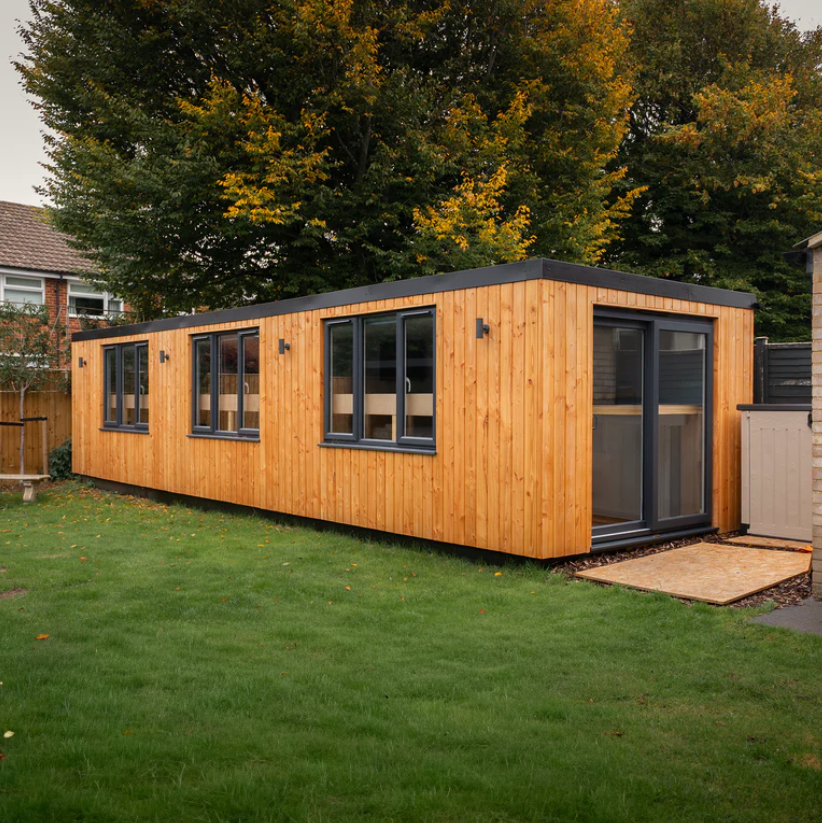
If you’re a homeowner or self-builder, choosing timber cladding is one of those decisions that looks aesthetic but behaves structural, financial, and long-term.
The debate around British cedar cladding vs British larch cladding isn’t about which timber is “better” — it’s about which one is right for how you live, maintain, and budget.
Both timbers perform well in the UK climate. Both are widely used. Yet they age differently, cost differently, and demand very different things from you over time.
This guide, similar to the guide on how to choose timber cladding, gives you the clarity most sales pages won’t — so you can choose once, and choose well.
British Cedar Cladding vs British Larch Cladding: The Quick Reality Check
| What Homeowners Care About | British Cedar Cladding | British Larch Cladding |
|---|---|---|
| First impression | Clean, refined, premium look | Warm, natural, more rustic |
| How it looks after 5 years | Even weathering, very little change | Noticeable colour variation, early movement |
| How it looks after 15–20 years | Consistent silver-grey, still tidy | Patchier ageing unless maintained |
| Maintenance effort | Very low – optional oiling only | Moderate – oiling & checks recommended |
| Risk of splitting & warping | Low | Higher, especially on exposed walls |
| Reaction to British weather | Extremely stable in wet conditions | Tough, but reacts more to moisture |
| Upfront material cost | Higher | Lower |
| Long-term cost (time & money) | Often lower overall | Can increase over time |
| Best suited for | Main homes, long-term self-builds | Garden rooms, cabins, budget builds |
| Homeowner regret factor | Rare | Common when maintenance is underestimated |

Why This Choice Matters for Homeowners
Cladding is not a short-term feature. Once installed, it affects:
-
Your ongoing maintenance workload
-
How your home weathers and ages
-
Long-term repair and replacement costs
-
Kerb appeal and resale value
Many homeowners regret their cladding choice not in year one — but in year five, when upkeep realities kick in. Did you know we also sell composite wall cladding? This is very popular as a timber-alternative.
Let’s break this down honestly.

British Cedar Cladding Explained
What Is British Cedar?
British cedar cladding is typically UK-grown Western Red Cedar.
It’s naturally rich in oils and extractives that protect it from decay, moisture, and insect attack - without chemical treatment.
Lifespan
-
Classified as Durability Class 2 (naturally durable)
-
Expected lifespan: 40–60 years when correctly detailed
-
Performs exceptionally well in exposed, wet environments
Cedar’s stability is one of its strongest advantages — it expands and contracts less than many other softwoods.
Appearance Over Time
Fresh cedar starts with warm honey and reddish tones. Left untreated, it weathers evenly into a soft silver-grey — often considered a premium, architectural finish.
Importantly: cedar fades uniformly, not patchily.

Image shows redwood cladding over time.
Maintenance Reality
This is where cedar truly shines for homeowners.
-
Can be left untreated
-
Optional oiling with Osmo oil every 2–4 years if colour retention is desired
-
Minimal risk of splitting or cupping
Best for homeowners who:
✔ Want low maintenance
✔ Prefer a refined, consistent look
✔ Plan to stay long-term
British Larch Cladding Explained
What Is British Larch?
British larch cladding is a dense, resin-rich softwood grown widely in the UK.
It’s tougher and heavier than cedar, with strong structural properties.
Lifespan
-
Classified as Durability Class 3 (moderately durable)
-
Expected lifespan: 25–40 years
-
Often benefits from surface treatment in harsh exposures
Larch is robust, but less dimensionally stable than cedar.
Appearance Over Time
Larch starts pale golden and knots are more pronounced. Over time, it also silvers — but often unevenly, especially where water runoff occurs.
Many homeowners love the character. Others find it looks “rough” sooner than expected.
Maintenance Reality
This is where expectations matter.
-
More prone to surface splitting and movement
-
Benefits from regular oiling or staining
-
Knots can bleed resin in hot weather
Best for homeowners who:
✔ Want a more rustic look
✔ Are comfortable with periodic upkeep
✔ Need to manage budget carefully

British Cedar vs British Larch: Side-by-Side Comparison
Durability
-
Cedar: Higher natural durability, less treatment needed
-
Larch: Durable but benefits from protection
Maintenance
-
Cedar: Low, optional
-
Larch: Moderate, ongoing
Visual Ageing
-
Cedar: Even, elegant silvering
-
Larch: More variation, visible weathering
Stability
-
Cedar: Excellent dimensional stability
-
Larch: More prone to movement and splits
Cost (UK Typical)
-
Cedar: Higher upfront cost
-
Larch: More affordable initially
Important insight:
Larch may cost less to buy — but cedar often costs less to live with.
Sustainability & UK Sourcing
Both timbers perform well environmentally when responsibly sourced.
British Cedar
-
Slower-growing
-
Often used more efficiently due to stability
-
Long lifespan reduces replacement impact
British Larch
-
Faster-growing
-
Widely available in the UK
-
Slightly shorter service life
For eco-conscious self-builders, longevity is sustainability — and cedar has the edge here.
Which Should You Choose as a Homeowner?
Choose British Cedar Cladding If:
-
You want minimal maintenance
-
You value long-term appearance
-
Your home is exposed to harsh weather
-
You see cladding as a lifetime feature
Choose British Larch Cladding If:
-
Budget is a major constraint
-
You like a natural, rustic look
-
You don’t mind ongoing upkeep
-
The building is sheltered or secondary
Final Verdict: Think Beyond Year One
For some homeowners, that ongoing attention becomes part of the enjoyment. For others, it quietly turns into a job they didn’t realise they were signing up for.
Fast forward ten or twenty years and the gap between the two becomes much clearer. Homes clad in cedar tend to just… hold themselves together. The boards weather evenly, the colour settles into a consistent silver-grey, and most owners don’t feel the need to constantly intervene. That’s why cedar is so often chosen for main homes and long-term self-builds — it lets you get on with living, rather than thinking about the outside of the house every few seasons.
Larch, on the other hand, usually asks a bit more of you. Maybe that would mean re-oiling every few years, keeping an eye on boards that have moved or split, or accepting that the look will change more noticeably over time. None of this is really a deal-breaker - but it’s better to actually know it upfront than be surprised later, especially if your home sits in an exposed spot!
If what you really want is peace of mind, a predictable finish, and one less thing on your maintenance list, British cedar cladding is very hard to argue with. Yes, it costs more at the start, but many homeowners find that cost balances out when they’re not paying — in time or money — for constant upkeep.
If, however, you’re working to a tighter budget, enjoy being hands-on, or you’re cladding something like a garden room, studio, or secondary building, British larch cladding still makes a lot of sense. It’s reliable, characterful, and good value — as long as you’re comfortable giving it a bit of attention now and then.