
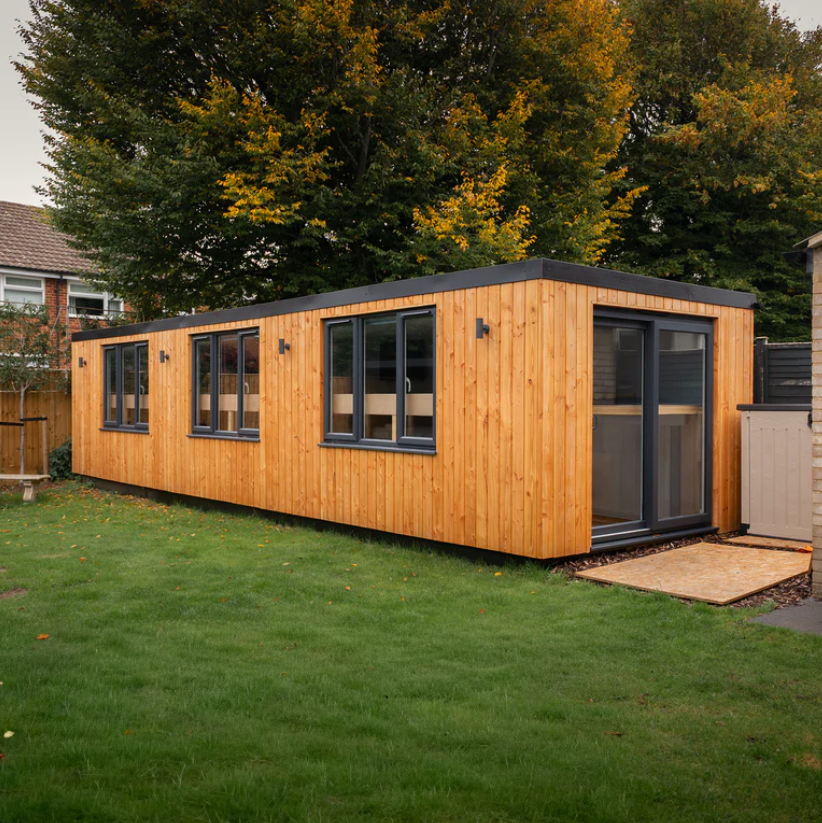
Choosing the right timber cladding for your home can feel overwhelming at first. There are loads of timber types, profiles and finishes, and they all promise something slightly different.
The truth is, there isn’t one “perfect” option for everyone – it depends on your budget, your style, your location and how much maintenance you’re happy with.
This guide breaks everything down in plain English, so you can make the right choice without guesswork.
Step 1: Start with the big question – what look are you after?
Before you think about timber species, start with the visual goal.
Do you want something...
-
Modern and clean?
-
Warm and natural?
-
Rustic and characterful?
-
Bold and architectural?
For example:
-
If you like crisp, modern lines, Shadow Gap Cladding (below) works beautifully. The boards are designed to sit with consistent, deliberate gaps between them, which creates strong shadow lines across the wall. This gives buildings a very clean, architectural feel and works especially well on contemporary homes, garden rooms and extensions. It’s a great option if you want timber to look sharp and intentional rather than rustic or traditional. Shadow gap also works really well vertically or horizontally, depending on the style you’re aiming for.

-
If you prefer a classic, traditional look, Shiplap Timber Cladding (below) is often the better fit The slight overlapping design helps water run off more effectively, which is why it’s been used on outdoor buildings for so many years. Visually, it creates softer shadow lines and a more familiar, established look that works beautifully on cottages, garden buildings, sheds and barns. Shiplap is ideal if you want your building to feel timeless rather than ultra-modern.

-
If you want a smooth, neat finish with tight joints, Tongue and Groove Timber Cladding (below) is a great choice. The boards interlock tightly, giving you a very uniform, seamless appearance once installed. This makes it particularly good for modern garden rooms, home offices and feature walls where you want the timber to feel refined and premium. Because of the tight joint system, it also offers good protection from wind and rain, making it practical as well as good-looking.

Tongue and groove cladding, pictured above on a garden shed.
Step 2: Choosing the right timber type
This is where performance really comes in.
Different timbers behave very differently outdoors.
British Cedar Cladding
British cedar cladding is a brilliant all-rounder. It’s naturally resistant to rot and insects, lightweight to handle and ages beautifully. It’s perfect if you want durability without heavy chemical treatments.
British cedar cladding is one of those materials we confidently recommend again and again, simply because it performs so well in real-world UK conditions. It’s naturally resistant to rot, decay and insect attack, which means it lasts beautifully outdoors without relying on heavy chemical treatments. That makes it a really sensible choice if you want something that’s low-maintenance but still feels natural and honest.
One of the things people appreciate most about British cedar is how easy it is to work with. It’s lightweight, it cuts cleanly and it’s far more forgiving during installation than harder, denser timbers. That makes it a great option whether you’re a professional installer or tackling your first cladding project yourself. And once it’s on the wall, it just looks right — clean grain, subtle colour variation and a warmth you don’t get with artificial materials.
Over time, British cedar weathers gracefully. Left untreated, it slowly softens into a silver-grey patina that looks increasingly characterful as the years go by. If you prefer to lock in the original honey tones, you can oil or stain it — and because of the way cedar absorbs finishes, those treatments tend to last longer and fade more evenly than on standard softwood.
If you’re drawn to clean, contemporary architecture, British Cedar Shadow Gap Cladding is especially worth considering. It pairs the natural beauty of cedar with sharp, defined shadow lines, creating a really strong modern look without feeling cold or industrial. It’s a popular choice for new builds, extensions and garden rooms where design matters just as much as durability.
More often than not, British cedar ends up being the timber people choose when they want a balance of performance, appearance and sustainability - something that looks good on day one and still looks good years down the line.
British Larch Cladding
British larch cladding is often the timber we point people towards when they need something genuinely tough that still looks good on a building. It’s a dense, slow-grown timber, which gives it natural strength and stability that stands up brilliantly to the UK’s wet, windy and unpredictable climate.
One of the biggest advantages of British larch is that it doesn’t rely on heavy chemical treatments to perform well outdoors. Its natural resin content gives it strong resistance to rot and moisture, which makes it a reliable choice for long-term exterior use. You get the reassurance of durability without turning your project into a chemically treated product.
Visually, larch is very versatile. When it’s first installed, it has a warm, slightly golden tone with a strong, defined grain. As the months and years pass, it naturally weathers to a soft silver-grey. Many of our customers actually prefer this aged look, as it gives buildings a timeless, architectural feel that blends beautifully into both rural and urban surroundings.
We often recommend British larch cladding to customers who want something “hard-wearing” but don’t want to sacrifice the natural charm of real timber. It sits nicely between budget softwoods and high-end hardwoods — offering excellent performance without the eye-watering price tag.
For more contemporary projects, Larch Shadow Gap Cladding is especially popular.
This profile gives much stronger shadow lines and a more architectural finish than traditional overlaps or tongue and groove boards. It’s a favourite for modern homes, garden rooms and stylish extensions where clean lines really matter.
If you’re working on a project that needs to cope with real British weather while still looking sharp years down the line, British larch is one of the most dependable and visually rewarding choices you can make.

Above shows Larch Shadow Gap Cladding.
European Larch Cladding
European larch cladding is often chosen by customers who want the strength and reliability of larch, but with a slightly different visual character and price point. It offers very similar durability to British larch, making it a strong performer in the UK climate, but the grain and colour tones can be slightly more varied, which gives it a distinctive look once installed.
One of the big advantages of European larch is that it delivers excellent performance without pushing the budget too far. It naturally resists moisture and decay thanks to its resin content, and it holds up well against wind and rain when installed correctly. That makes it a really practical option for exterior walls, garden buildings, sheds and larger cladding projects where value matters just as much as appearance.
In terms of appearance, European larch tends to have a slightly wider grain pattern and a more varied natural colour range than British larch. Some boards lean warmer, some slightly cooler in tone, which gives walls a more textured, organic feel. Over time, it weathers in the same way as other larch species, softening into a pale silver-grey that matures beautifully.
We often recommend European larch cladding to customers who want a tough, long-lasting timber but don’t necessarily need the ultra-uniform finish of premium grades. It sits in a really practical middle ground — tougher and more durable than standard softwood, but more accessible than high-end hardwoods.
If you’re working on a project where you want real timber character, strong performance and sensible cost control, European larch cladding is one of the most well-balanced options you can choose.
Western Red Cedar Cladding
Western Red Cedar cladding is often the timber people choose when appearance really matters. It has a beautifully refined grain and natural colour variation that gives façades a warm, high-end feel straight away. It’s one of those timbers that looks special even before it’s installed, and once it’s on a wall, it instantly elevates a building.
Despite being a premium timber, it’s surprisingly practical to work with. Western Red Cedar is lightweight, stable and easy to handle on site, which makes fitting smoother and less physically demanding than many denser hardwoods. It also holds its shape exceptionally well, so you get cleaner lines and more consistent spacing over time.
What really sets Western Red Cedar apart is its natural stability. It has a very low tendency to warp, twist or split, which means the finish you get on day one is much closer to what the building will still look like years down the line. It also has natural oils that give it good resistance to moisture and decay without relying on heavy chemical treatments.
Like most quality timbers, it transitions beautifully with age. You can leave it untreated and let it weather into an elegant silver-grey, or treat it to preserve the warm reddish-brown tones if you prefer a richer look.
We usually recommend Western Red Cedar cladding for high-visibility projects — feature façades, architectural builds, modern extensions and luxury garden rooms - where visual impact and long-term stability really matter.
If your priority is achieving a clean, sophisticated timber finish that stands out for the right reasons, Western Red Cedar is very hard to beat.
Redwood Cladding
Redwood cladding is the option many people go for when they need reliable timber cladding while keeping a close eye on budget.
It’s practical, widely available and, when pressure treated, offers good protection for everyday outdoor use.
It’s particularly well suited to large areas where cost quickly adds up — things like sheds, workshops, garden fences, cabins and utility buildings. If you’re cladding a big surface and trying to balance appearance with affordability, redwood often makes the project financially realistic.
While it doesn’t have the natural durability of timbers like cedar or larch, pressure-treated redwood performs very well when installed correctly and maintained. It gives you a clean, consistent look and works nicely for straightforward, functional builds.
It’s also an easy timber to work with. It cuts cleanly, fixes easily and is forgiving during installation, which makes it a popular choice for DIYers and trade professionals alike.
We’re always honest with customers about redwood: it’s not the longest-lasting timber in therange, but for the right project, in the right location, it’s a smart and sensible choice. If your priority is cost-effective coverage with a tidy, traditional timber finish, redwood cladding does the job well.

Accoya Cladding
If durability is really your top priority, Accoya cladding sits in a league of its own. It isn’t just “treated” timber — it’s modified right through the core using a process called acetylation, which permanently changes how the wood behaves. The result is a timber that’s incredibly stable, highly resistant to rot and insect damage, and far less affected by moisture than traditional wood.
Where normal timber can swell, shrink and twist with the seasons, Accoya stays remarkably consistent.
That makes it ideal for projects where clean lines really matter, and where you don’t want to be constantly maintaining or correcting movement over time.
It’s commonly used on high-end residential builds, commercial projects and exposed locations where performance is non-negotiable.
Visually, Accoya has a clean, pale appearance when first installed, which works beautifully for modern architecture. Left untreated, it weathers evenly into a soft silver-grey. If you prefer colour, it takes paint and stain extremely well — and because it’s so stable, finishes tend to last far longer than on standard timbers.
We usually recommend Accoya to customers who don’t want to compromise on longevity. It does cost more upfront, but for many people it makes sense as a long-term investment. If you want timber cladding that stays straight, stays strong and stays looking smart with minimal fuss, Accoya cladding is very hard to beat.
Iroko Cladding
Iroko cladding is often described as a practical alternative to teak. It’s a dense, highly durable hardwood with a rich golden-brown colour that matures beautifully over time. If you want something that feels premium, solid and long-lasting, iroko is a serious contender.
One of the reasons it’s used so often in high-end projects is its natural resistance to moisture, decay and insect attack. It performs very well outdoors without relying on heavy chemical treatments. That makes it ideal for architectural builds, contemporary homes and feature façades where both appearance and longevity matter.
Iroko is heavier and harder than softwoods, which gives it that solid, high-quality feel, but it also means installation needs a bit more care and the right fixings. If you want timber cladding that feels substantial and genuinely luxurious, iroko delivers.
Waney Edge Cladding
Waney edge cladding is completely different in feel to more refined, machined boards. Instead of clean, uniform edges, the boards keep their natural “live” edges, which gives a rugged, organic and very authentic timber look.
This style of cladding is perfect for feature walls, garden rooms, cabins, bars, outdoor kitchens and rustic-style builds. Every board looks slightly different, which gives the wall real depth and character. No two walls ever look the same with waney edge.
It’s not about perfection or sharp lines — it’s about embracing the natural shape of the tree and creating something that feels warm, tactile and genuinely handcrafted.
Composite Cladding
Composite cladding is the go-to option if you love the look of timber but don’t want the ongoing maintenance that comes with real wood. It’s made from a mix of wood fibres and recycled plastics, designed to give a consistent, modern finish with minimal effort.
Unlike natural timber, composite cladding won’t rot, warp, split or need regular staining. It holds its colour well, resists fading and is extremely low maintenance. That makes it a popular choice for busy homeowners, rental properties and commercial applications where time and upkeep are a concern.
While it doesn’t have the unique grain and natural variation of real timber, it offers predictability and convenience. If what you want is a clean, uniform exterior that stays looking tidy year after year with very little work, composite cladding is well worth considering.

The charcoal composite wall cladding in use on a UK new build.
Step 3: Choosing the right profile
Timber type matters, but the profile has a huge impact on both how your cladding performs and how your home looks once it’s finished.
This profile is ideal if you want a really neat, uniform finish.
The boards interlock tightly, which helps reduce draughts and improves weather resistance.
It’s a strong choice for garden rooms, extensions and home offices where you want the walls to look smooth, refined and well-built.
Best if you want:
- Tight joints with minimal visible gaps
- Strong protection against wind and rain
- A clean, modern look
Shiplap
Shiplap is a more traditional cladding style that uses overlapping boards. T
his overlap helps drive rainwater away from the structure, which makes it a great option for exposed locations.
Visually it feels softer and more classic than modern profiles, so it works beautifully on cottages, sheds, cabins and older-style properties.
Best if you want:
- Overlapping boards that shed rainwater well
- A timeless, traditional appearance
- A forgiving profile that performs well in wet weather
Shadow Gap
Shadow gap cladding gives a much more architectural finish. Each board is installed with a precise, consistent gap that creates strong shadow lines. This makes it perfect for modern homes, contemporary extensions and feature walls where you want the cladding to feel intentional and design-led.
Best if you want:
- Clean, sharp horizontal or vertical lines
- Defined shadow gaps for visual depth
- A bold, high-end contemporary finish
Step 4: Don’t forget the finishing details
Even the best timber cladding can look unfinished if the details aren’t right. This is where trims make a big difference.
Corner trims help hide raw board ends and create neat, clean edges around windows, doors and corners. They don’t just improve the look — they also help protect vulnerable edges from water ingress and movement over time.
Step 5: Use the right fixings
This is where a lot of installations succeed or fail.
Timber cladding should always be fixed using stainless steel screws.
Standard steel fixings can rust, stain the wood and shorten the life of your cladding.
These are designed specifically for timber cladding:

And you can view the full range of fixings and extras here:
Using the right fixings gives you
- Stronger holding power
- Cleaner appearance
- Longer-lasting performance
Step 6: How much timber will you actually need?
Under-ordering timber is one of the most common and most frustrating mistakes.
It leads to delays, mismatched batches and extra delivery costs. To avoid that, it’s far better to calculate properly at the start.
How Much Timber Cladding Do I Need
It walks you through measuring your walls, allowing for overlaps, corners and wastage, so you order once and order right.
Final honest advice
If you want something natural, reliable and visually warm, British cedar and British larch are consistently solid choices.
If you want maximum lifespan and minimal upkeep, Accoya cladding is genuinely worth the investment.
If budget is your main concern, pressure-treated redwood can do a perfectly good job when installed properly.
The right timber cladding isn’t about choosing the most expensive option — it’s about choosing what suits your home, your location and how much maintenance you’re realistically happy to take on.
